
Making Coffee for Guests with One Handheld Frother: A Small-Batch Plan
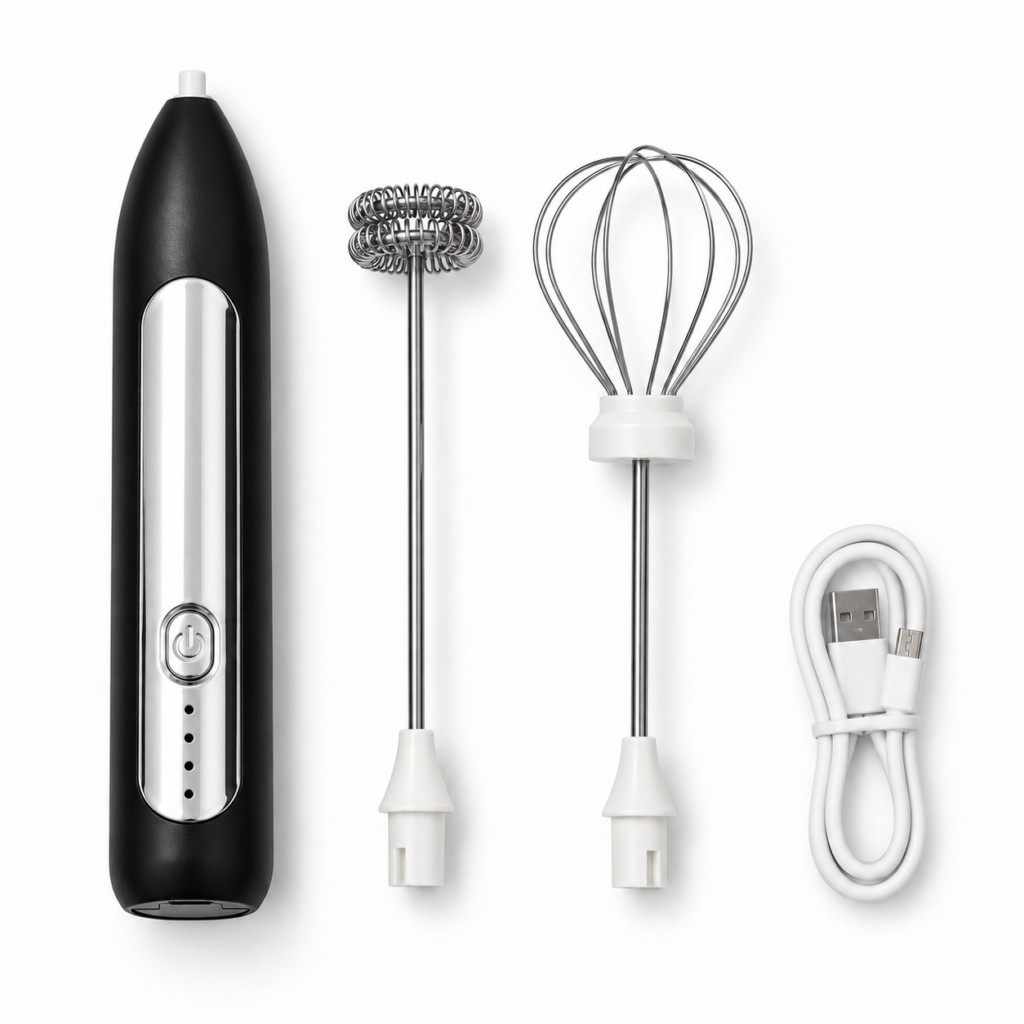
Making four coffees with one handheld frother is mostly an organisation problem. Prepare the parts that do not need the frother first, work in sensible batches and leave the final foam until close to serving. A larger gathering should not mean one uninterrupted motor run in an oversized bowl.
Ask the drink questions before heating anything
Find out who wants hot coffee, iced coffee, milk, no milk or less sugar. Ask about ingredient restrictions instead of guessing from previous visits. A small written list prevents remaking a cup because its sweetener or milk was wrong.
Keep requests attached to the cup position. For example, place the unsweetened cup on a separate tray corner. If an allergy is involved, a casually rinsed shared attachment should not be treated as a verified allergen-removal method; use a separate appropriate preparation arrangement.
Calculate ingredients without inventing appliance capacity
Suppose four guests each choose 80 ml of milk in their drinks. You would plan 320 ml in total. That arithmetic is a shopping and serving calculation, not permission to froth 320 ml in one go. The tool’s instructions and the vessel’s usable space determine the working quantity.
Measure the coffee base and sweetener separately so that the frother is not being asked to dissolve every cup’s ingredients at the last moment. Keep spoons, clean serving vessels and a cloth for spills within reach.
Use a simple order of work
| Stage | Preparation |
|---|---|
| Before guests are ready | Confirm preferences, set out cups and read the tool instructions |
| Before frothing | Prepare the coffee bases and arrange any separate heating |
| At serving | Froth a suitable quantity, finish the drink and serve |
| Between different ingredients | Clean or change the preparation equipment appropriately |
| After the round | Clean detachable parts, dry them and store the motor safely |
Follow the device’s prescribed rests and operating limits. Where those details are unclear, do not improvise continuous operation. A handle that becomes unusually hot or a motor that slows is a reason to stop.
Keep the cold ingredients cold
Do not leave the milk carton permanently beside the serving tray. Pour what you need and return it to refrigeration. FDA buffet guidance recommends keeping cold perishable food at safe cold temperatures and replacing small servings rather than repeatedly topping up old ones. Apply that principle to a coffee station with dairy ingredients.
Keep heated liquids away from children and place cups on a stable surface before using the wand. A guest holding a mug in mid-air is not a good substitute for a clear work area.
Know when to simplify the menu
For many cups at once, offer a straightforward coffee rather than promising personalised foam art. A jug-style appliance may suit some households better, but only after checking its actual capacity and programme limits. One tool is not automatically a commercial serving system.
The HandyDost two-attachment beater is a small handheld helper. Keep it within that role and use your preparation plan to reduce waiting rather than trying to increase motor load.
Read the equipment comparison, splash-control tips and sweetening cold drinks. Find more at the HandyDost blog.
AI-assisted planning guide; quantities above are an illustrative example, not a verified frother capacity.