
Tea Whitener vs Milk for Coffee in Pakistan: Read the Pack Before Frothing
A white packet or carton is not enough information to choose an ingredient for coffee. In Pakistani shops you may see liquid milk, milk powder, tea whitener and premixed coffee products near one another. Their preparation directions and intended uses can differ, even when the packages look equally convenient.
Before testing a frother, identify what you have actually bought. Otherwise, a disappointing cup may be an ingredient mismatch rather than a faulty tool.
Use the product name as the first check
Nestle Pakistan describes Everyday as a tea whitener or creamer, rather than normal milk. That statement concerns the named product; it does not describe every whitener, creamer or milk powder sold in Pakistan.
Look for the full product description, ingredients, preparation directions and storage instructions. Do not identify the category only by a brand name that may appear on several different products.
Separate three questions
- Will it mix into the drink? Follow the label for the amount of powder or liquid to use.
- Will it produce the foam you want? Mixing smoothly and producing a particular foam texture are different outcomes.
- Does it suit the person drinking it? Check ingredients and relevant dietary or allergen information rather than assuming equivalence.
A successful cup of tea does not prove that the same formulation will produce the milk texture shown in a latte demonstration. Equally, a product that does not make a large foam cap may still be doing the job its label describes.
Make a fair comparison at home
Use the same coffee, serving volume and vessel for two small comparisons. Prepare each dairy or whitener product according to its own directions; do not add equal spoonfuls merely for convenience if their instructions differ. Label the cups so you remember which is which.
Evaluate the things that matter to your routine: whether it disperses without dry pockets, how the drink tastes to you, how sweet it becomes and whether the final texture is useful. Do not turn one trial into a claim about every brand or every milk type.
If frothing is your priority, compare a small amount with the same attachment and method. Change the ingredient before also changing the temperature and mixing time. Keep any motor operation within the device instructions.
Do not let a frother replace preparation directions
A spinning head is not permission to use concentrated powder without the recommended liquid, or to force dry clumps against the shaft. Dissolve or reconstitute the product as instructed before attempting light mixing. Avoid filling a mug completely before switching the tool on.
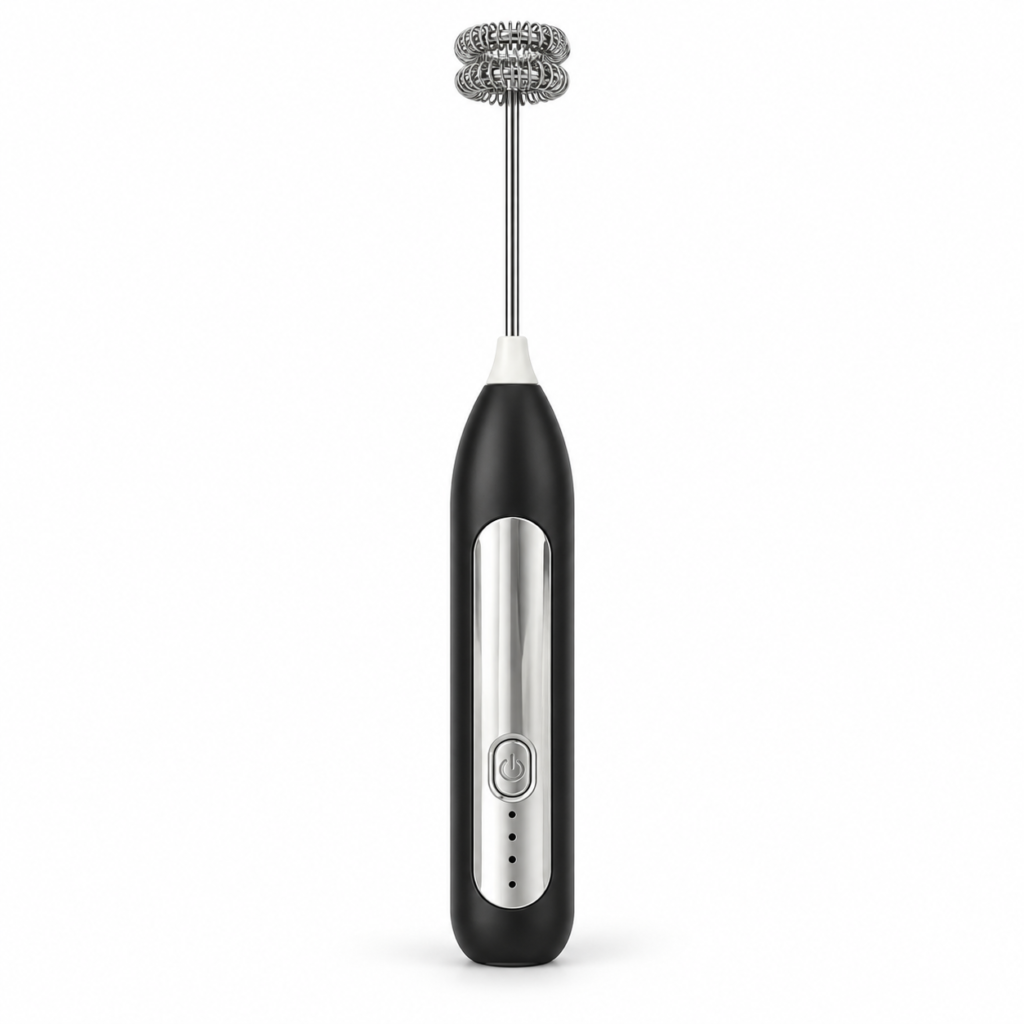
The HandyDost handheld frother has a coil head and a balloon whisk, but its listing does not certify a particular foam result for every locally available whitener. No independent brand-by-brand comparison is claimed here.
Keep the original label available
If you move a powder into another container, retain the product name, preparation directions and opening information. Use a clean, dry scoop and follow the manufacturer’s storage guidance. Do not make a large batch of reconstituted product and assume it has the unopened powder’s shelf life.
For a wider ingredient discussion, read frothing UHT, powdered and plant milk. For technique, see instant coffee preparation and foam troubleshooting. The guide library has more practical comparisons.
AI-assisted editorial guide. This is a label-reading framework, not nutritional or laboratory testing of dairy products.