
How to Stop a Milk Frother Splashing Out of the Cup
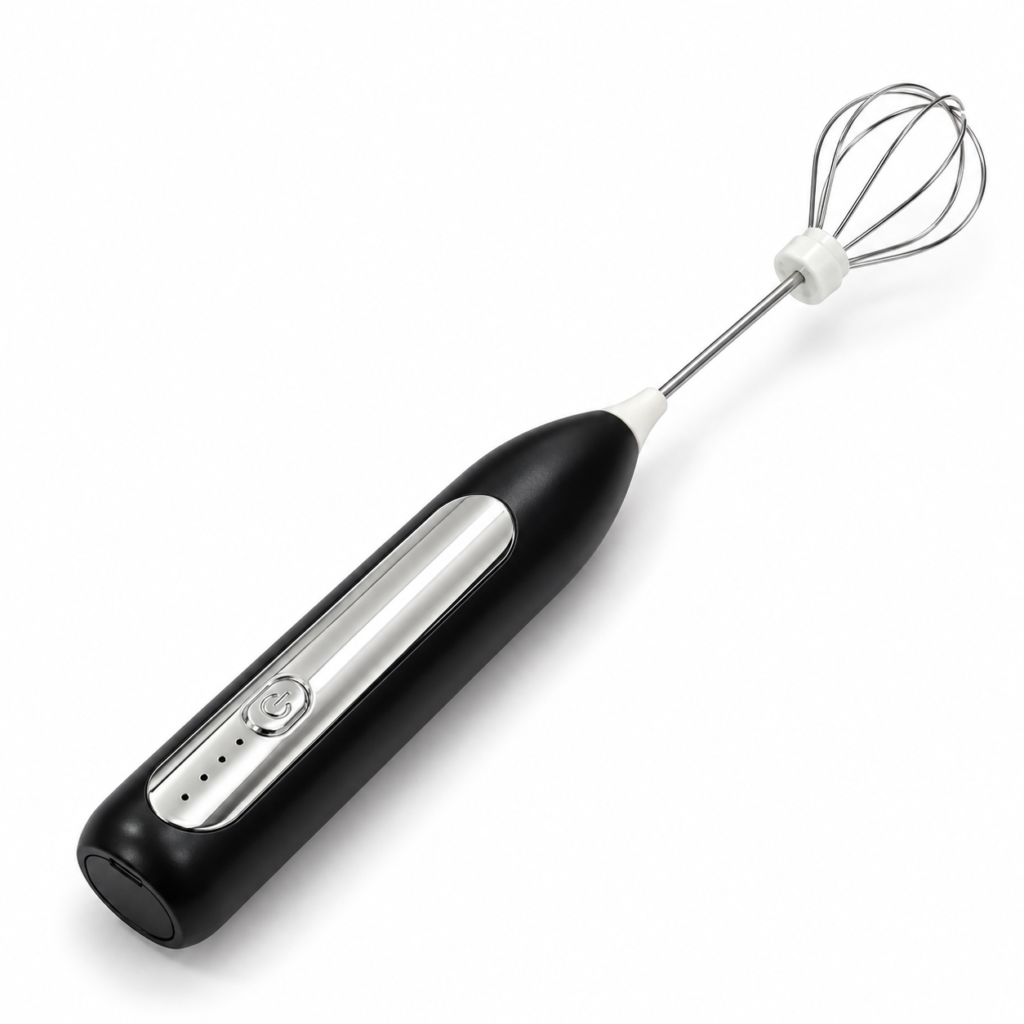
Most avoidable frother mess begins with one of three things: too little space in the cup, a spinning head lifted above the liquid, or an attachment too close to the side. Fix the setup before changing ingredients. A more powerful-looking tool is not necessarily the answer to milk on the worktop.
Find when the splash happens
As soon as you switch on: check whether the head is still above the milk and whether the cup is nearly full. During mixing: check your hand movement and the head’s clearance. When finishing: make sure the motor stops before you lift the attachment out.
This simple timeline is more useful than changing everything at once. Watch one short attempt and identify the exact moment the liquid escapes. Do not keep running the tool just to finish a drink when you cannot control the vessel.
Give the liquid room to move
Try a taller vessel with useful headroom and a stable base. Do not choose a cup so narrow that the head touches its sides. The balloon whisk needs more clearance than the small coil, so use a vessel that suits the attachment rather than one chosen only because it matches your serving mug.
Prepare the milk in a separate cup or jug and transfer it afterwards. This is especially helpful when the final drink already contains coffee, ice or syrup and the serving glass has little spare room. Zulay’s handheld-frother instructions also emphasise placing the head into the liquid before operation to reduce splashing.
Use a deliberate start-stop sequence
- Set the vessel down and fit the chosen head while the unit is off.
- Lower the head into the liquid, clear of the base and walls.
- Switch on with a steady grip rather than a sudden sweeping motion.
- Make small position changes while watching the surface.
- Switch off, wait for rotation to stop, then lift the head out.
If the model offers selectable settings, use them only as described in its instructions. Do not infer a speed sequence from a photograph or repeatedly press an unfamiliar control while the head is above the cup.
Reduce the batch instead of fighting it
For two drinks, preparing two modest portions can be easier than trying to froth a nearly full jug with a compact device. Keep the motor’s stated operating limits in mind and pause as instructed. A handheld coffee tool is not a full-size mixer for continuously processing a large batch.
The HandyDost two-head beater is listed for drinks and light mixing. It is not intended for hard, frozen or thick dough mixtures. In particular, keep ice in the serving glass instead of allowing a spinning coil to strike it.
Check for a mechanical cause
With the device off, inspect the shaft and connection. A visibly bent shaft, loose head or unusual vibration is a reason to stop, not to grip the tool harder. Ask the seller about the attachment fit or a damaged part. Never try to straighten a shaft while the motor is running.
Also remove dried residue according to the cleaning instructions. Do not wrap a cloth around a turning head to catch splashes or spin the attachment against a sponge.
A useful result is a repeatable one
When the setup works, note the cup and amount that fit comfortably. Keep them as your baseline. You can then adjust milk type or texture without reintroducing the same overflow problem. Read the full first-use method or the separate iced-coffee workflow. Find more help in the guide library.