
Handheld Frother, Steam Wand or Jug Frother: Which Fits Your Coffee Routine?
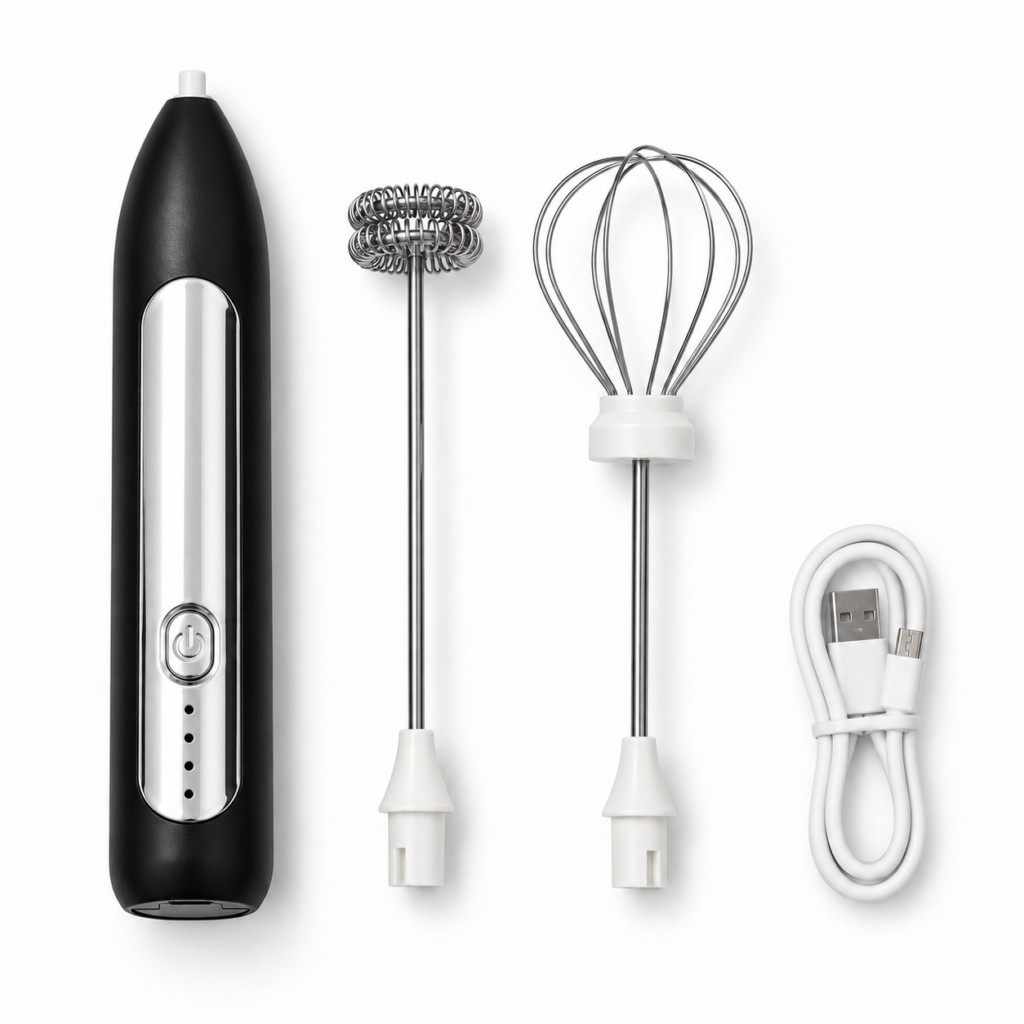
A handheld milk frother, an espresso-machine steam wand and an automatic jug frother can all help prepare a milky drink, but they are not interchangeable appliances. The useful question is not which produces the biggest mountain of bubbles. It is which one handles the part of your routine you actually want help with.
Start by separating three jobs: making coffee, heating milk and changing milk texture. Buying a frother does not necessarily cover all three.
What each tool takes responsibility for
| Tool | Main job | What you still arrange |
|---|---|---|
| Handheld coil frother | Aerates milk in your chosen vessel | Coffee, a suitable cup and separate heating when needed |
| Espresso-machine steam wand | Uses steam to heat and texture milk | A suitable pitcher, technique and machine cleaning |
| Automatic jug frother | Runs a model-specific mixing or heating programme | The right fill level, permitted ingredients and a separate coffee source |
For a concrete example, Nespresso’s Aeroccino 3 instructions distinguish hot and cold programmes and different maximum fill lines. Those controls belong to that appliance; they are not operating instructions for a handheld beater.
Choose by your usual drink
For an occasional instant coffee with a little milk foam, a handheld tool can be a straightforward addition. You can prepare the coffee separately, aerate a modest quantity of milk, then combine the two. You are controlling the vessel and milk depth yourself rather than pressing a fully automatic drink button.
For a regular espresso-and-latte-art routine, investigate the steam system on the espresso machine as well as the coffee extraction. Breville describes the steam wand on its Bambino machine as a milk-texturing component. This illustrates why an espresso setup is a different equipment decision, not simply a larger handheld whisk.
For someone who wants a repeatable programme with less hand movement, a jug may be worth considering. Check its actual capacity and cleaning requirements first. A large exterior does not tell you how much milk it can foam without overflowing.
Account for the work after the drink
Write down everything you would need to wash after making one cup. With a detachable handheld head, that may mean the attachment and a separate vessel, while the motor handle stays out of water. A jug can involve a lid, seal and whisk. A steam wand needs the cleaning routine specified for the machine.
Also consider storage. A drawer must protect a handheld shaft from bending. A countertop jug needs a dry place for its electrical base. An espresso machine is a permanent-space decision for many households.
A simple decision exercise
Describe your last five coffee drinks, not the drinks in an advertisement. Were they hot or iced? Did you want a foam topping, a smooth milk texture or simply thoroughly mixed instant coffee? How many were made together? Circle the repeated task and buy for that task.
The HandyDost Coffee Beater & Milk Frother comes with a coil head, a balloon whisk and a USB cable. Its listing does not describe a heating jug, espresso extraction or a steam system. That boundary matters more than how many beverage names can be placed in a product caption.
Continue with coffee beater versus hand mixer and realistic latte-art expectations. The guide library brings the related instructions together.
AI-assisted editorial guide, not an independent appliance test. How our guides are prepared.