
Burger Patties Falling Apart? Separate Mixture, Shaping and Turning Problems
A patty that breaks while leaving the mould presents a different problem from one that falls apart when turned in the pan. Identify the stage first. Otherwise, you may keep adding ingredients to a recipe when the real issue is transfer, support or handling.
Name the failure point
| When it breaks | First area to review |
|---|---|
| Before pressing | The recipe’s ingredient balance and preparation |
| During release | Overfilling, sticking or an awkward release method |
| Between mould and tray | Support underneath the patty and transfer distance |
| During turning | Cooking method, spatula support and unnecessary repeated handling |
Take a note or a photograph for your own comparison before changing the entire batch. Do not repeatedly handle raw meat for a long experiment while it sits warm on the counter.
Do not treat every patty recipe as the same mixture
A simple beef burger, a vegetable patty and a shami kabab may use different binding and preparation methods. An egg or spoonful of flour can change a mixture, but it is not a universal repair. Return to a complete recipe that matches the food you are making.
Weber’s burger-preparation guidance recommends keeping meat cold and avoiding excessive mixing. Those are useful starting principles for its burger method, not proof that every recipe should have the same ingredients.
Test one moulded portion
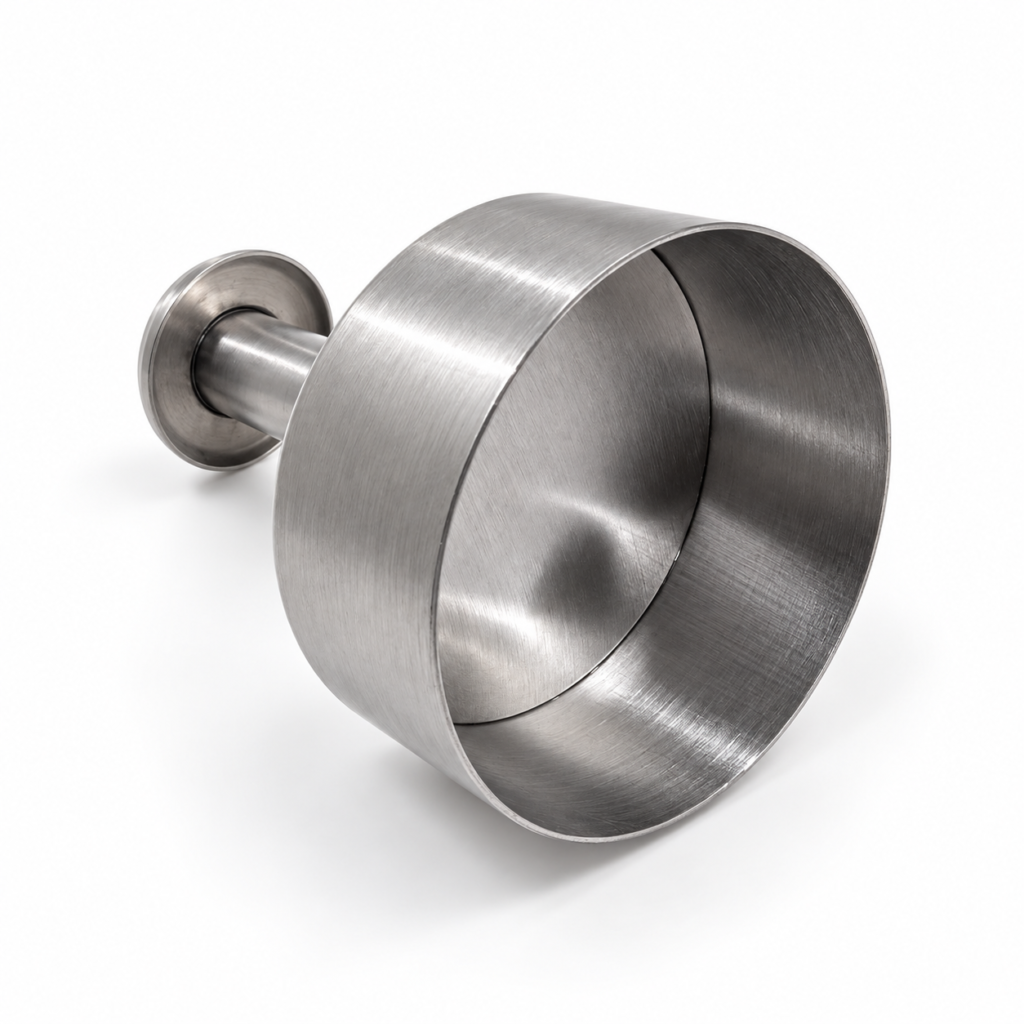
Prepare a small portion using the recipe’s instructions. Fill the HandyDost manual patty press without overloading the mould and use controlled pressure. Keep fingers clear of moving parts. Release the patty onto a suitable clean surface rather than trying to catch it while it hangs unsupported.
If the problem is sticking, investigate the food-contact surface and the recipe’s release method. A liner, where suitable and permitted, is a different choice from changing the mixture. Do not scrape a fragile patty out with a sharp knife pressed against the mould.
Support the transfer
Put the receiving tray close to the forming area. Use an appropriate utensil that supports the patty rather than pinching one edge. If you must carry it across a crowded kitchen, rearrange the workspace before deciding that the mixture needs more binder.
The press is a preparation tool. Its silver appearance is not evidence that it should be used to push patties onto a hot griddle.
Keep cooking control separate from appearance
Follow the cooking method for the recipe and use a suitable spatula. Avoid repeated poking simply to check whether a patty feels firm. For ground beef, USDA says colour is not a reliable indicator of safe doneness; use a food thermometer and the appropriate internal temperature.
Do not deliberately undercook a patty to keep its shape. If a safely cooked trial does not hold together, adjust the next preparation step rather than lowering the safety endpoint.
Change one variable
Keep the recipe and portion size consistent while testing a better release or transfer. If you change the ingredients, pressure, thickness and heat together, you cannot identify the cause.
Read release troubleshooting, shami versus burger mixtures and thermometer placement. More guides are at HandyDost’s blog.
AI-assisted troubleshooting framework; not a verified diagnosis or an independently tested burger recipe.