
Where to Put a Food Thermometer in Burgers and Chicken
A food thermometer is useful only when its sensing area reaches the part of the food you need to check. Touching the hot pan, a bone or just the outer surface can give an unhelpful reading. Read the thermometer instructions first so you know where it senses temperature and how long it needs to settle.
Use the correct endpoint for the food
USDA’s safe-temperature chart gives 160°F, or 71.1°C, for ground meats such as beef burgers, and 165°F, or approximately 74°C, for poultry, including ground chicken. These are different categories from intact steaks with a specified resting step.
Choose the applicable guidance for the actual ingredients. A chicken burger is still poultry, and a recipe mixing different ingredients needs a safe method for the complete preparation.
Thin burgers: approach from the side
For a thin patty, USDA recommends inserting the probe sideways or at an angle so it reaches the centre. The aim is to position the sensing area in the food, not through it against the hot cooking surface.
Use a thermometer suitable for thin foods and follow its insertion-depth instructions. Do not assume every long probe senses only at its very tip.
Chicken: find the thick area without contacting bone
Following USDA’s thermometer-placement guidance, check an appropriate thick part of the chicken while avoiding bone. Where pieces vary in size or thickness, check more than one place or piece rather than assuming the smallest one represents the whole batch. Follow the source guidance and thermometer instructions for the cut being cooked.
A dark marinade, crisp skin or clear-looking juices should not replace the measurement. Nor does a larger amount of injected marinade prove that the centre has reached a safe temperature.
Common reading mistakes
| Mistake | Better check |
|---|---|
| Probe touches the pan | Reposition the sensing area inside the food |
| Only the thin edge is measured | Check the relevant central or thick area |
| The reading is taken before it settles | Wait as the thermometer manufacturer directs |
| One small piece stands in for an uneven batch | Check appropriate additional pieces or locations |
| A dirty probe touches finished food | Clean it as instructed between checks and tasks |
Do not improvise electrical or heat exposure
Some thermometers are designed to remain in an oven and others are for an instant check. Keep a display, handle or cable out of heat unless its instructions permit that exposure. Follow calibration or accuracy-check directions where the maker provides them.
Keep the thermometer accessible so you do not search a drawer while holding a hot tray. Use appropriate protection and cooking utensils rather than touching hot food with bare hands.
A forming tool is not a doneness tool
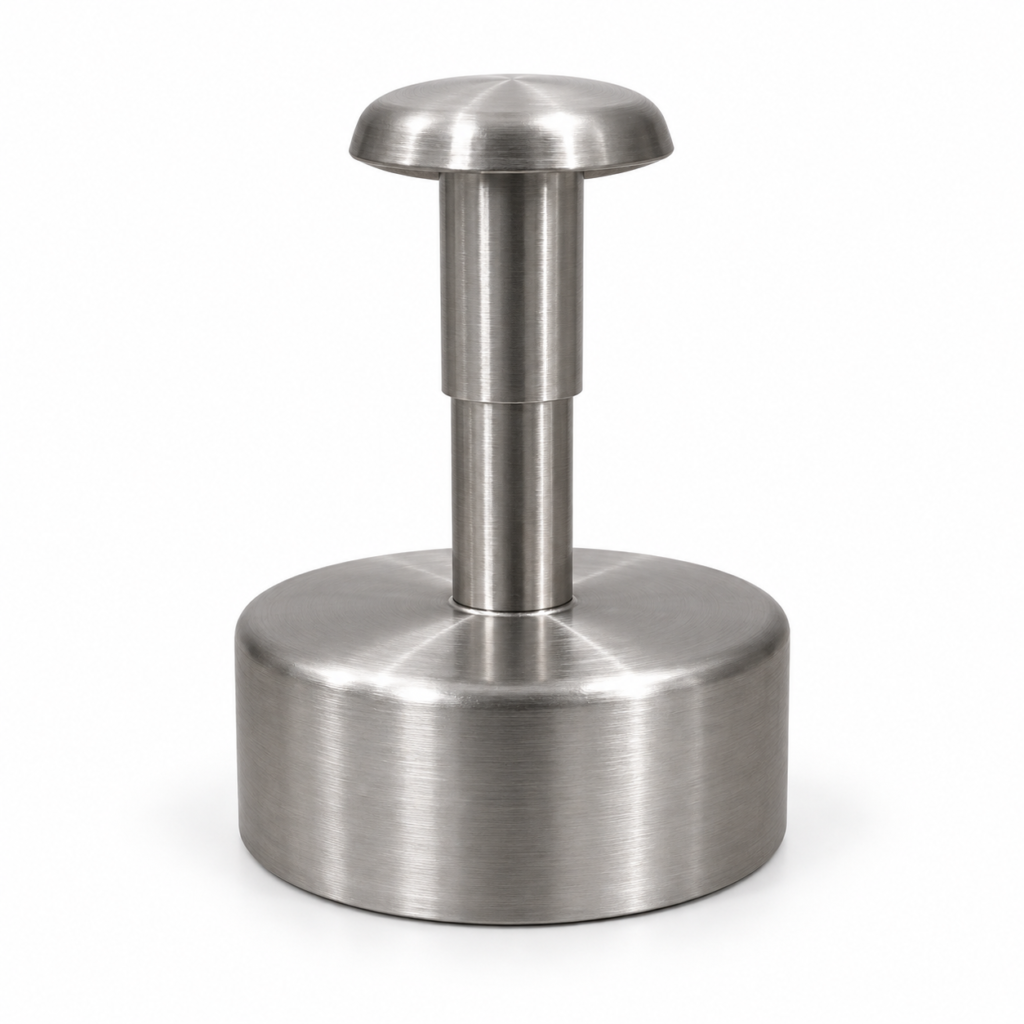
The HandyDost patty press can help make a repeated starting shape, but it does not measure internal temperature. The marinade injector is a seasoning tool, not a thermometer. This guide does not imply that a thermometer is included with either product.
Read burger shrinkage, safe thawing and raw-to-cooked handling. More guides are in the HandyDost library.
AI-assisted guide using official food-safety references. Follow the thermometer and recipe instructions for your equipment and ingredients.