
Smooth or Chunky Tomato Chutney: Decide the Texture Before Choosing Tools
For tomato chutney, the recipe’s texture matters as much as the tomato itself. A smooth cooked paste, a roughly pounded accompaniment and a chopped fresh preparation are different dishes. Decide which one you are making before peeling every tomato or choosing a motorised tool.
Read the method all the way through
Two primary recipe examples illustrate the distinction. Chetna Makan’s tomato chutney begins with processing ingredients into a paste before cooking. NDTV Food’s Punjabi-style version roasts ingredients and uses a mortar and pestle. The equipment follows the method, not just the dish’s name.
Use one complete recipe for ingredient amounts, cooking and storage. Taking an uncooked step from one and a storage statement from another is not a reliable shortcut.
Choose the texture you will serve
| Target | Preparation question |
|---|---|
| Smooth paste | Does the recipe use a blender, processor or another suitable method? |
| Roughly crushed texture | Can you use a stable mortar and pestle or the specified manual method? |
| Visible chopped pieces | What size will fit comfortably on the food it accompanies? |
A chutney served with a bite-sized snack needs a different practical consistency from a sauce stirred through another dish. That is a useful decision to make before the mixture is already too fine to change back.
Peeling is an ingredient decision, not an automatic rule
Some recipes remove skins and others do not. Check when the peeling happens: before cooking, after roasting or through a separate method. Do not hold a hot tomato in one hand and try to improvise a peeling stroke with the other.
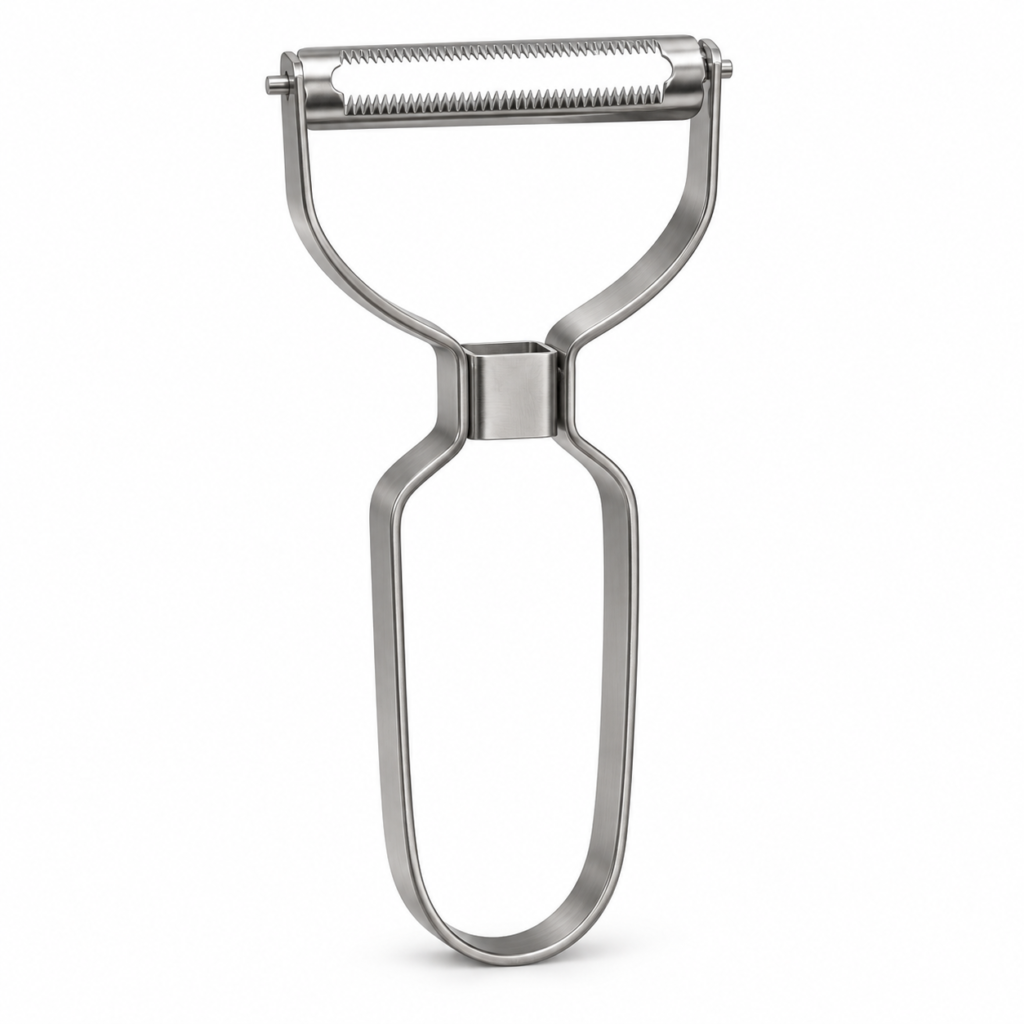
The HandyDost serrated peeler is a preparation tool, not a chutney processor. For suitable firm tomatoes, use controlled peeling as described in our tomato-peeling guide. A very soft or hot tomato requires the method specified by the recipe rather than more pressure on the blade.
Keep seeds and liquid decisions consistent
If your chosen recipe uses whole chopped tomatoes, removing all seeds and liquid changes its starting ingredients. If it asks for a drained preparation, do not add the collected liquid back without a reason. Make deliberate adjustments and record them so you can reproduce the result.
For a personal comparison, divide a small safely prepared batch before the final processing stage and try two textures with appropriate tools. Compare how each spreads or sits on the intended food. This is a taste-and-serving exercise, not a claim about a traditional formula.
Do not use a milk frother to cut tomatoes or herbs
A coil whisk is not a blade. Tomato pieces, ginger, chillies and herb stems belong in equipment designed to process them. A second whisk attachment on a coffee beater does not change that boundary. Follow blender instructions for hot ingredients, lid use and filling limits.
Storage needs its own instructions
A chutney containing salt, sugar or vinegar is not automatically shelf-stable. Follow a reliable recipe’s refrigeration instructions, and do not improvise canning or room-temperature storage from a casual cooking recipe. Use a clean serving spoon and keep the chutney away from raw-meat utensils.
Related guides cover ginger preparation, washing produce and the difference between whisking and blending. Find more at HandyDost’s blog.
AI-assisted technique comparison, not an independently tested chutney recipe.