
Wash Produce Before Peeling: A Cleaner Start to Kitchen Preparation
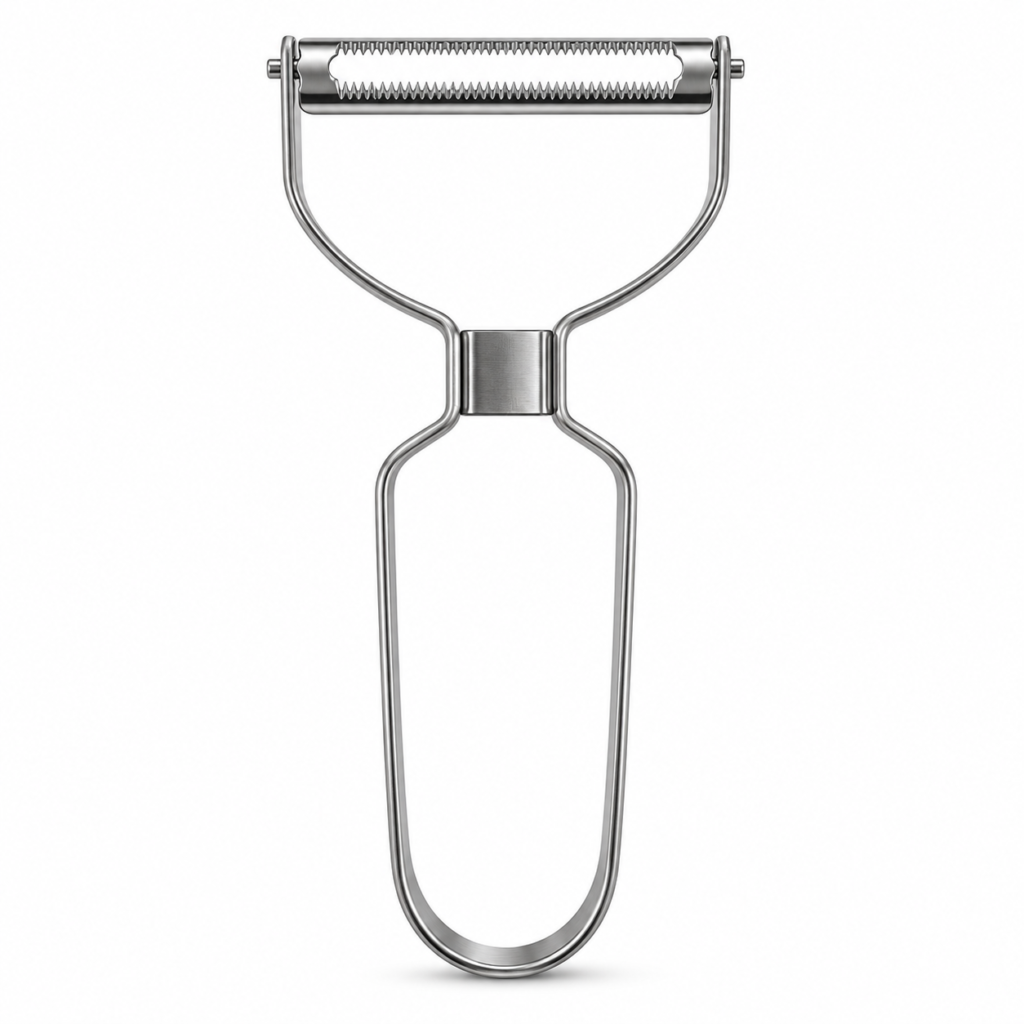
Wash fruit and vegetables before peeling them, even when you plan to remove the skin. A peeling blade or knife can move material from the outside onto the exposed food. Starting with unwashed produce and relying on the peeler to do the cleaning combines two different jobs.
FDA produce guidance recommends rinsing under running water before preparation and does not recommend washing produce with soap or detergent. Washing reduces contamination; it does not make food sterile.
Set up a clear route through the workspace
Create three small areas: produce waiting to be washed, a clean preparation area and a container for peelings. The exact layout depends on your kitchen, but the direction should be clear. Avoid putting a peeled potato back into the bag or bowl that held unwashed vegetables.
Wash your hands and clean the board and utensils before starting. Keep raw meat and its juices away from the vegetable area. A sink used moments earlier for raw-food cleanup is not automatically a clean surface on which to place ready-to-eat produce.
Match the washing action to the produce
Handle delicate produce gently. For firm items, the FDA notes that a clean produce brush can be useful. Do not use the bathroom brush, a dish brush with visible grease or a harsh scouring pad as a substitute. Dry with a clean towel or paper where appropriate before moving to the cutting area.
Follow package directions for products labelled washed or ready to eat. An additional rinse is not automatically an improvement if it introduces contact with a dirty sink or utensil.
Peel with control rather than pressure
Once the produce is clean, inspect it and choose an appropriate tool. The HandyDost serrated Y-peeler has a horizontal cutting edge and needs controlled strokes with fingers kept clear. It is not a device for scraping mould or contamination away from questionable food.
Work away from your fingers and stop before the remaining piece becomes too small to hold securely. Keep peelings from accumulating around the blade. Clean the tool appropriately if it becomes clogged rather than clearing it with a fingertip.
A small-batch routine
- Inspect the produce and remove unsuitable items from the preparation plan.
- Wash the amount you are about to prepare using appropriate clean water.
- Move it to a clean board or container.
- Peel or cut using a suitable tool.
- Put prepared food into a clean vessel and continue with the recipe or appropriate cold storage.
This arrangement avoids repeatedly switching between dirty bags, clean food and waste. For a mixed meal, prepare ready-to-eat salad ingredients before handling raw meat, then clean the workspace thoroughly between tasks.
Do not add an unsupported cleaning chemical
More products are not necessarily better. Soap, washing-up liquid and household disinfectants are not ingredients for washing food. Follow official food-handling advice rather than a social-media mixture promoted as making produce completely germ-free.
Similarly, do not assume that peeling permits indefinite room-temperature storage. Cut and prepared ingredients still need the handling appropriate to the food and recipe.
For the next stage, read controlled Y-peeler use, peeler cleaning and separating raw and ready-to-eat tasks. More practical guides are at HandyDost’s blog.
AI-assisted household guidance based on official produce-handling advice.