
How to Clean an Electric Milk Frother and Its Attachments
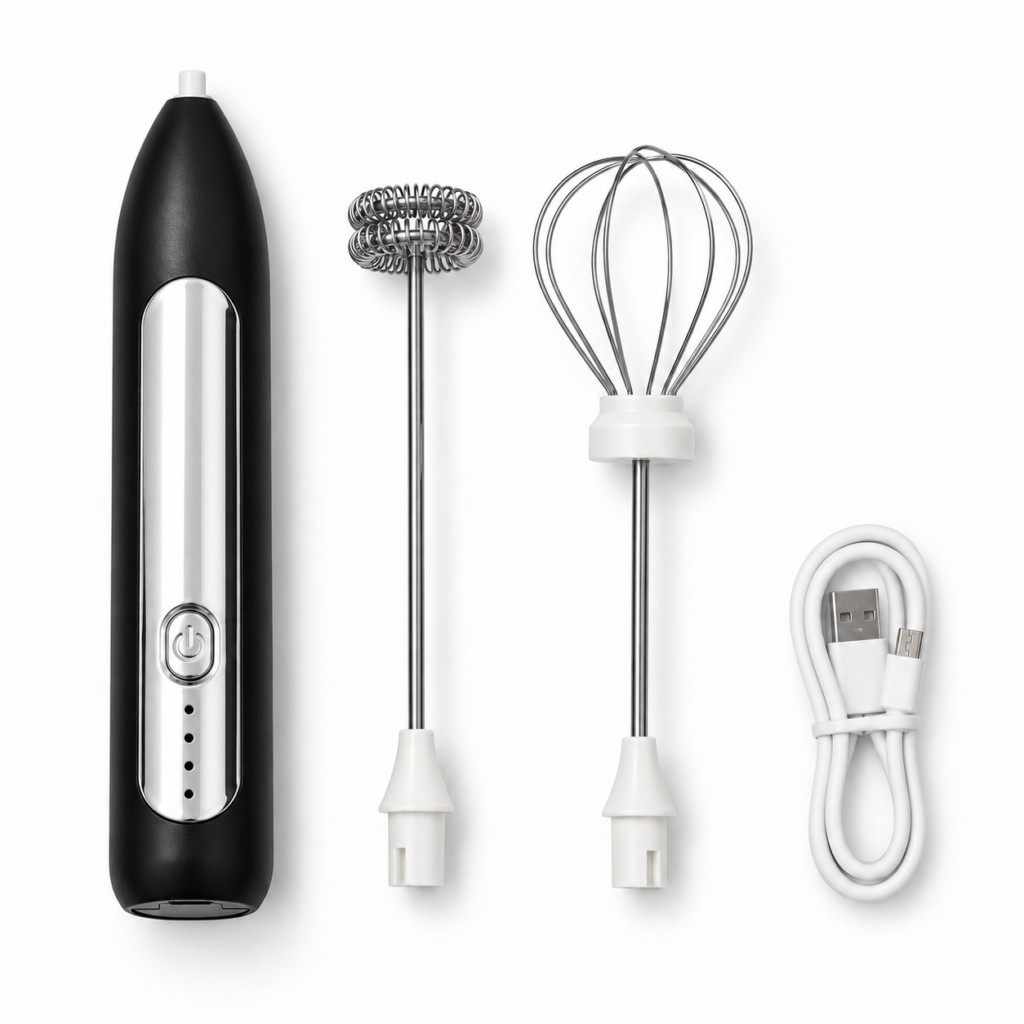
The important distinction when cleaning an electric milk frother is between the food-contact attachment and the electrical handle. A detachable whisk can be washed separately; that does not make the motor, button or charging port washable under running water. Always follow the instructions for your exact model.
On the HandyDost Coffee Beater & Milk Frother, the listing specifies detachable heads, separate washing and a lightly damp cloth for the handle. It does not claim that the complete unit is waterproof or dishwasher-safe.
The after-drink routine
- Turn off and disconnect. Wait until the attachment stops completely. Disconnect the charging cable if attached.
- Remove the head as instructed. Hold the connector rather than levering against the wire loops.
- Wash the food-contact parts. Use warm water and washing-up liquid appropriate for kitchen utensils. Work around the coils or whisk wires gently.
- Rinse away cleaner and milk residue. Inspect the spaces between the wires rather than assuming the outside appearance tells the whole story.
- Dry before reassembly. Keep water away from the handle connection and charging port.
Manufacturer guidance for detachable-head models, such as Zulay’s rechargeable frother care instructions, likewise separates washing the heads from wiping the main body. That source is a general comparison, not the specification sheet for HandyDost’s model.
When milk has dried between the coils
With the head detached, give the residue time to soften in warm soapy water if the supplied instructions permit it. A small, soft cleaning brush can reach gaps without pulling the spring loops apart. Do not use a knife, pin or abrasive metal tool to scrape the coils. If you cannot reach trapped material without distorting the attachment, ask the seller about an appropriate replacement head.
Clean sooner after use where possible. A quick, deliberate wash is easier to incorporate into a routine than a long cleaning job before the next drink. This is an organisational advantage, not a promise that a brief rinse sanitises the tool.
What not to do
Do not put the complete handle in a bowl of water. Do not run water over the button or charging socket. Do not charge a unit that is still damp. Do not assume a vinegar soak, bleach solution or dishwasher cycle is suitable simply because an online tip recommends it for a different frother.
Spinning a dirty attachment in a mug of water may loosen visible milk, but it is not a substitute for inspecting and properly washing accessible food-contact parts. In particular, do not operate the motor while your fingers or a cleaning brush are close to the moving whisk.
Give each part a place to dry
Set the detached head where air can reach it and where someone will not catch a hand on the shaft. Wipe the handle and let any surface moisture dry before putting it away. Keep the cable separate from the damp washing area. Once everything is dry, store the head in a way that prevents pressure on its wires.
A small open tray beside your regular drying area can make this easy. The tray should not become a puddle: empty and wipe it as part of the routine. Do not close clean-but-wet parts inside a travel pouch and expect them to dry there.
A final check before the next use
Look for residue, a loose connector or a bent shaft. Fit the required head only after checking that the connection is dry. If the motor unit was immersed accidentally, stop using it and seek the manufacturer’s or seller’s advice rather than switching it on to see whether it survived.
See also which attachment to choose and a cleaning routine for your other kitchen gadgets. More guides are in the HandyDost library.