
Milk Frother Attachments: Coil Head vs Balloon Whisk
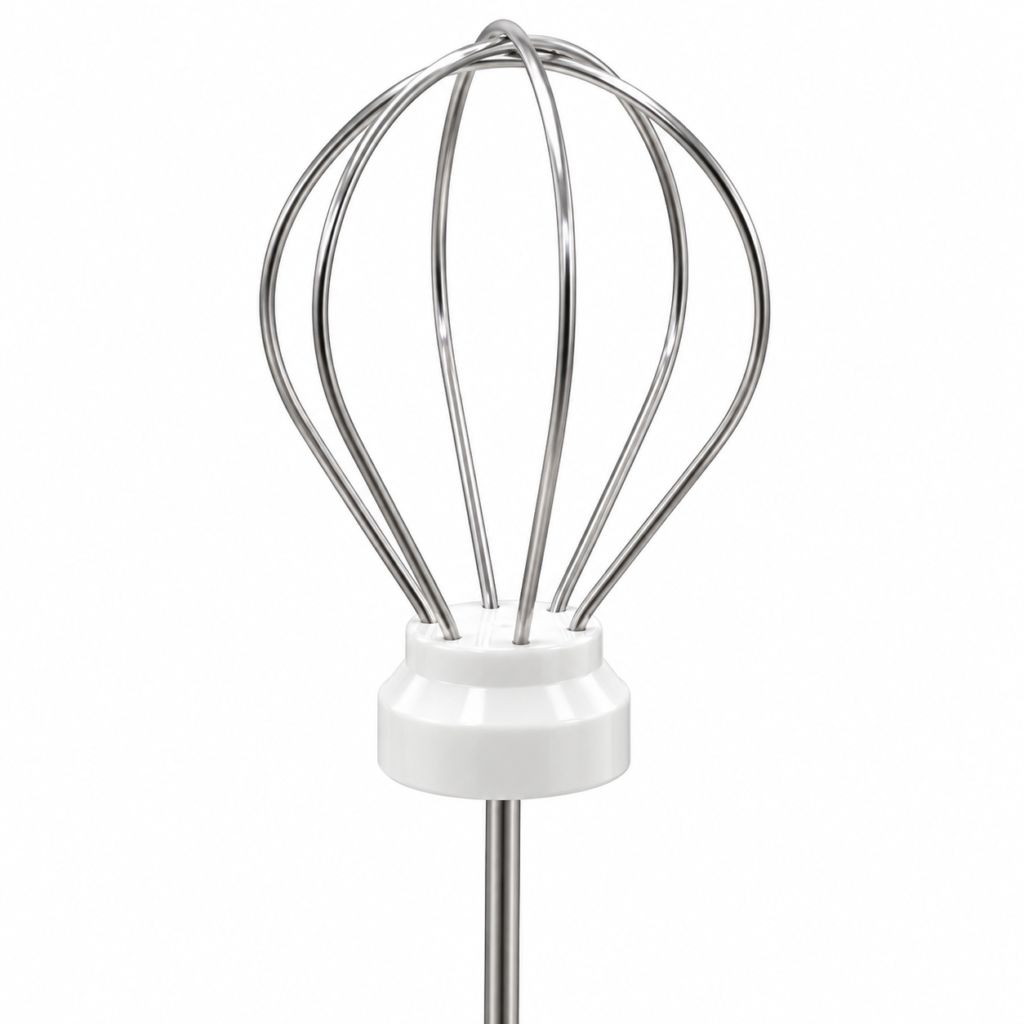
The two heads in a milk-frother kit are there for different jobs. The compact coil is the starting choice for milk frothing and drinks. The balloon whisk is intended for light mixing. Picking the correct shape is useful, but neither attachment increases the motor’s capabilities beyond the limits of the actual device.
The HandyDost two-attachment set contains one double-coil frothing head, one balloon whisk, a motor handle and a USB cable. This guide uses that published kit description rather than assuming additional heads or functions are included.
Recognise the two shapes
The double-coil head has two small circular wire coils at the end of a shaft. It occupies relatively little space in a cup. When your immediate goal is a milk-foam topping or mixing a drink, this is the head to identify first.
The balloon whisk has long wire loops forming a rounded cage. It takes up more room in the vessel. For a small, loose mixture that the product instructions allow, choose a bowl or cup with enough clearance for that shape.
Do not confuse ‘two heads’ with two complete motors, or assume both heads should be fitted at once. Check the complete-kit photograph alongside the written package contents when comparing listings.
Choose by mixture, not by appearance
Start with the result you need. Milk aeration calls for a frothing head. Light whisking calls for the whisk. A thick mixture that stalls the tool calls for stopping, not simply changing to the larger-looking attachment. The HandyDost listing excludes thick dough, hard food and frozen mixtures.
If a recipe describes creaming butter, kneading or processing solid ingredients, do not treat a handheld drink frother as a substitute unless its manufacturer specifically allows that task. A broad advertisement saying ‘mix anything’ is less useful than a clear instruction describing the intended consistency and quantity.
Change heads without damaging the connection
- Switch the device off and wait for all movement to stop.
- Disconnect any charging cable before handling or cleaning the attachment area.
- Support the connector while removing the fitted head in the manner described by the supplied instructions.
- Check that the replacement head and connection are clean and dry.
- Seat the new head securely without bending the shaft or twisting the wire cage out of shape.
The connection method matters. Do not assume a threaded, push-fit or clip arrangement from a similar-looking device online. If the supplied instructions are unclear or the part will not fit with normal handling, ask for help instead of forcing it.
What to check before turning it on
Look along the shaft for obvious bending, inspect the head for loose wires and ensure it is not rubbing against the vessel. Lower it into the mixture before starting. Keep fingers, hair and loose clothing away while the head moves. Switch off before lifting the spinning attachment out of the liquid.
Wash detached heads separately and wipe the electrical handle. Comparable detachable-head manufacturer guidance is available in Zulay’s rechargeable frother care notes; use your own model’s instructions for the precise fitting and cleaning method.
Store the unused head deliberately
An unused attachment often gets damaged in a drawer before it wears out in use. Give it a shallow tray or a compartment where heavier utensils will not press on the coils or cage. Keep it dry and place it where the next person can identify it without pulling at the wires.
Continue with coffee beater versus hand mixer, cleaning the heads, or the HandyDost guide library.