
Lemon Zest, Peel and Pith: Pick the Right Tool for the Recipe
A recipe asking for finely grated lemon zest is not asking for thick pieces of white pith. Before cutting, identify the form the recipe needs: very fine coloured zest, wider strips of peel or juice. The tool and the part of the fruit you use should follow that instruction.
Know which layer you are collecting
King Arthur Baking’s zesting guide describes removing the fragrant coloured surface while avoiding the bitter white pith beneath. Its preferred tool for fine zest is a rasp-style zester. That is a different working edge from the horizontal blade on a vegetable peeler.
For a recipe where the peel remains in the food, its size affects the eating experience. A long strip can be useful when a recipe calls for an infusion that is later strained, while small flecks distribute differently through a batter or dressing.
Read the recipe’s form before substituting
| Instruction | What to prepare | Question to ask |
|---|---|---|
| Finely grated zest | Small pieces of the coloured outer layer | Do you have a suitable zester or fine rasp? |
| Strips of peel | Wider pieces prepared as the recipe specifies | Will they be removed later or eaten? |
| Lemon juice | The liquid from the fruit | Does the recipe need acidity, liquid or aroma? |
Do not assume juice and zest are interchangeable because they come from the same lemon. King Arthur’s guide to lemon ingredients distinguishes their uses.
Set up before grating
Wash the fruit and dry the surface as appropriate. Place a clean bowl or plate where it can catch the zest without making you chase it across the board. Keep fingers clear of the sharp surface and use controlled strokes rather than squeezing the fruit against the tool.
Work around the fruit so that you can see the areas already used. Repeatedly scraping the same pale patch is not a way to collect more coloured zest. Stop once the recipe’s amount is reached rather than stripping every fruit simply because it is on the counter.
Where a vegetable peeler fits
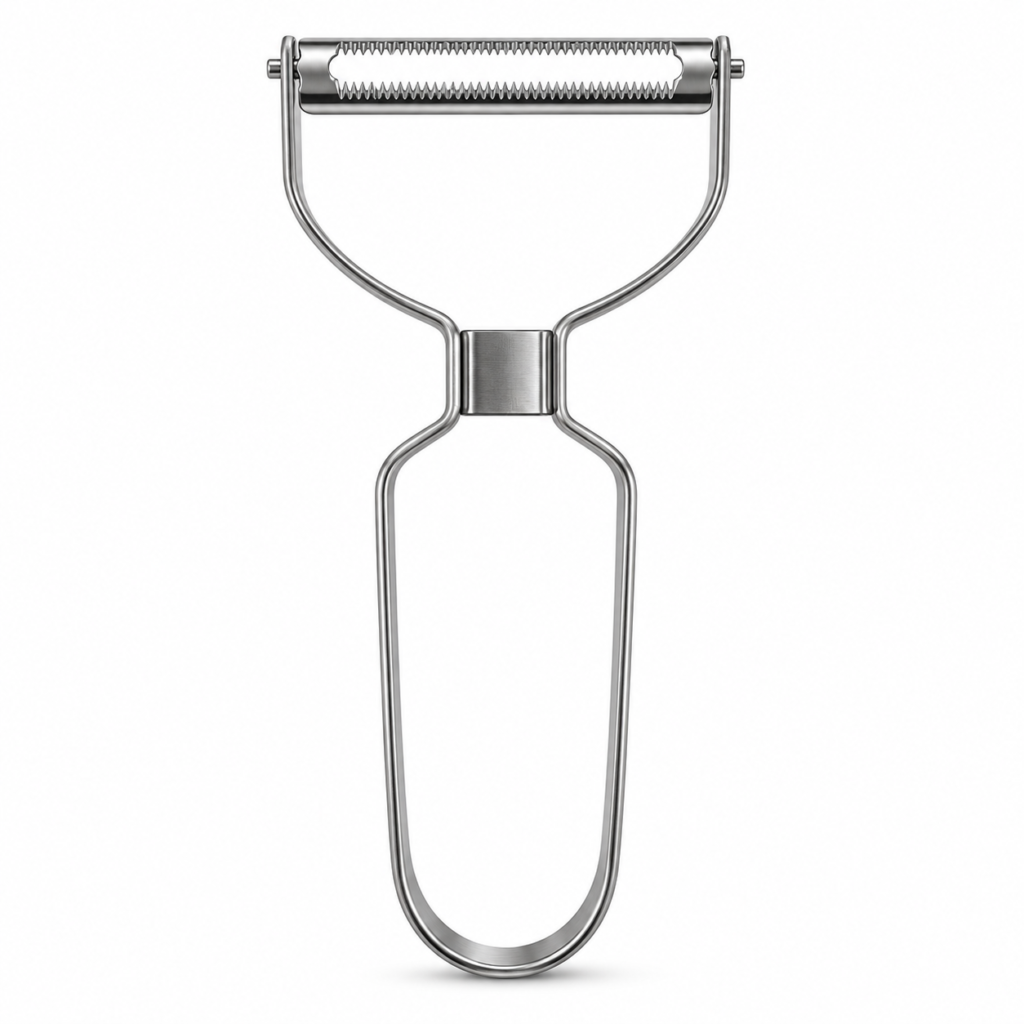
A suitable peeler may be useful for wider strips when a recipe calls for them, but it will not automatically produce the fine texture of a rasp. The HandyDost serrated Y-peeler is listed as a vegetable peeler, not as a dedicated citrus zester. Check the tool’s suitability rather than assuming every blade will glide equally well over a small curved fruit.
If a cut is awkward or the tool slips, stop and choose a better method. Do not hold a small lemon in a position that places fingers directly in the blade’s path.
Use the remaining fruit deliberately
After removing zest, plan how the remaining lemon will be used and store it according to the recipe or appropriate food-storage guidance. Keep zest separate from shell fragments, labels and other waste on the work surface. Label anything saved for another recipe so that it is not confused with a different preparation.
Compare peeler blade types, review washing before preparation and explore another ingredient where tool shape matters. More guides are in the HandyDost library.
AI-assisted guide; product compatibility and recipe yields have not been independently tested.