
Cleaning Basting Brushes and Marinade Injectors After Raw Meat
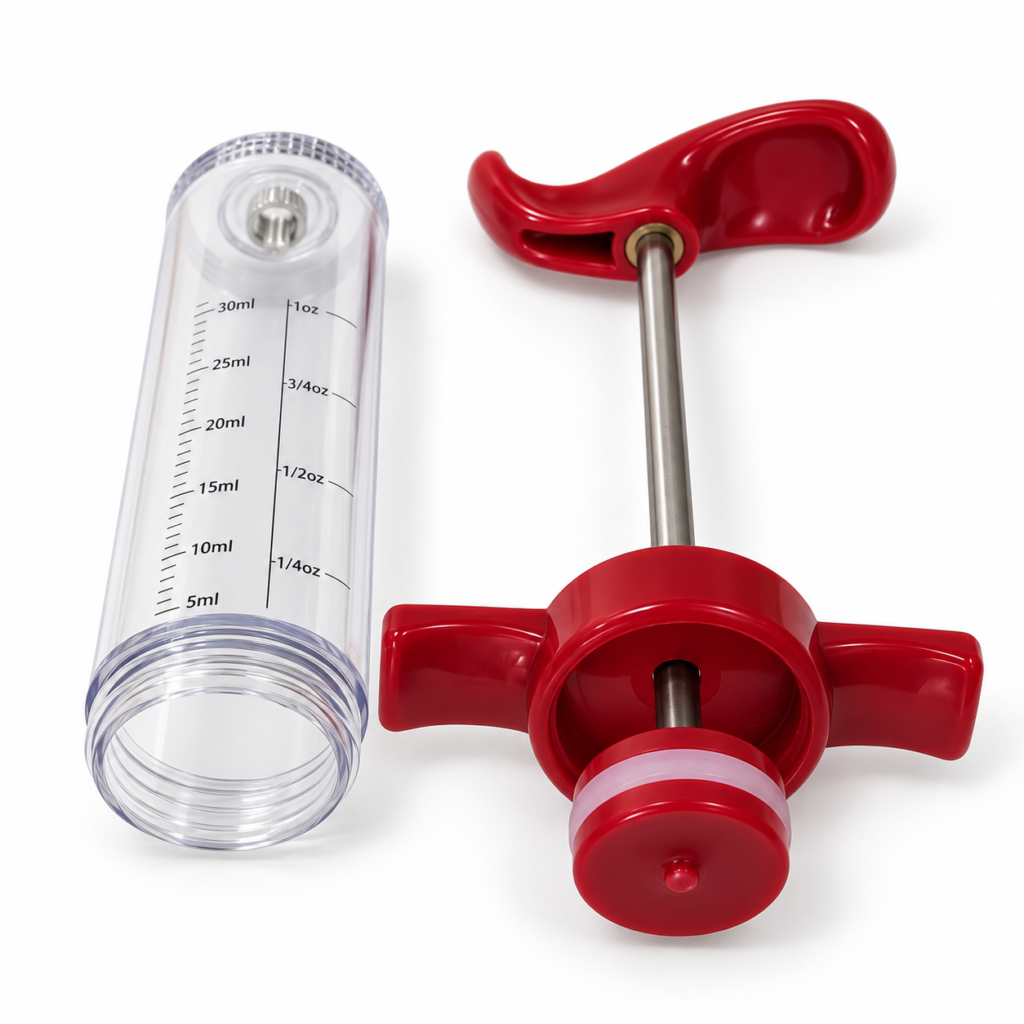
After raw-meat preparation, treat the brush, injector, working bowl and nearby surfaces as part of the same cleaning job. Rinsing one visible part while returning a contaminated utensil to the serving area defeats the point. Plan a dirty zone and a clean zone before you start washing.
Separate the serving sauce first
The easiest clean-up starts before the raw meat touches the utensils. Reserve clean sauce in its own bowl and keep the raw-food tools away from it. USDA’s poultry-marinating advice explains that marinade exposed to raw poultry must not be treated as clean sauce. Do not pour a used injector’s contents into your reserved serving portion.
Dispose of unsuitable leftover working liquid appropriately and keep it away from ready-to-eat food. Set used equipment in a visible place so another person does not pick it up for serving.
Clean the basting brush
Remove the cover if fitted. Wash the head, handle and cover with the cleaning method allowed by the manufacturer, working between the bristles to remove residue. Rinse off cleaner and inspect the head rather than looking only at the outside.
The HandyDost brush instructions call for hand-washing and drying before replacing the cover. They do not establish a dishwasher temperature or chemical-sanitising concentration. Do not apply an aggressive treatment based on a different model’s material claims.
Clean the injector in its intended parts
The HandyDost 30 ml injector has removable components, including the needle, barrel and plunger assembly. Separate them as instructed so you can reach the accessible food-contact surfaces.
- Keep the pointed needle visible and away from your hand.
- Wash the barrel and plunger, including areas where liquid can remain.
- Clean the needle passage using the supplied or approved method.
- Rinse and inspect before reassembly.
- Dry the components and store the point securely.
Do not blow or suck through the needle. Do not probe a blockage toward your fingers. If residue cannot be removed with an appropriate method, stop using that part and ask the seller about replacement.
Cleaning is not the same as every sanitising method
Removing visible food and washing properly are essential, but not every material tolerates every heat or chemical treatment. Follow a manufacturer’s compatible sanitising instructions where provided. Do not invent a bleach dilution or boiling-water process for an unverified plastic barrel or brush.
The USDA’s outdoor food-safety guidance also stresses clean equipment and separation between raw and cooked food. A spare clean utensil for serving can be simpler than trying to wash a raw-food tool hurriedly beside the grill.
Finish with surfaces, hands and storage
Clean the working bowl, preparation surface and any area affected by drips. Wash your hands before handling clean utensils or food ready to eat. Let equipment dry before closing it in a box or replacing a cap.
For a barbecue away from home, confirm that you have suitable washing facilities or enough separate clean equipment. Do not assume a bottle of water and a quick wipe will cover every cleaning requirement.
Related guides: injector troubleshooting, controlled brush use, and choosing the preparation method. Browse the HandyDost library.