
Marinade Injector Clogged or Leaking? Troubleshoot It Safely
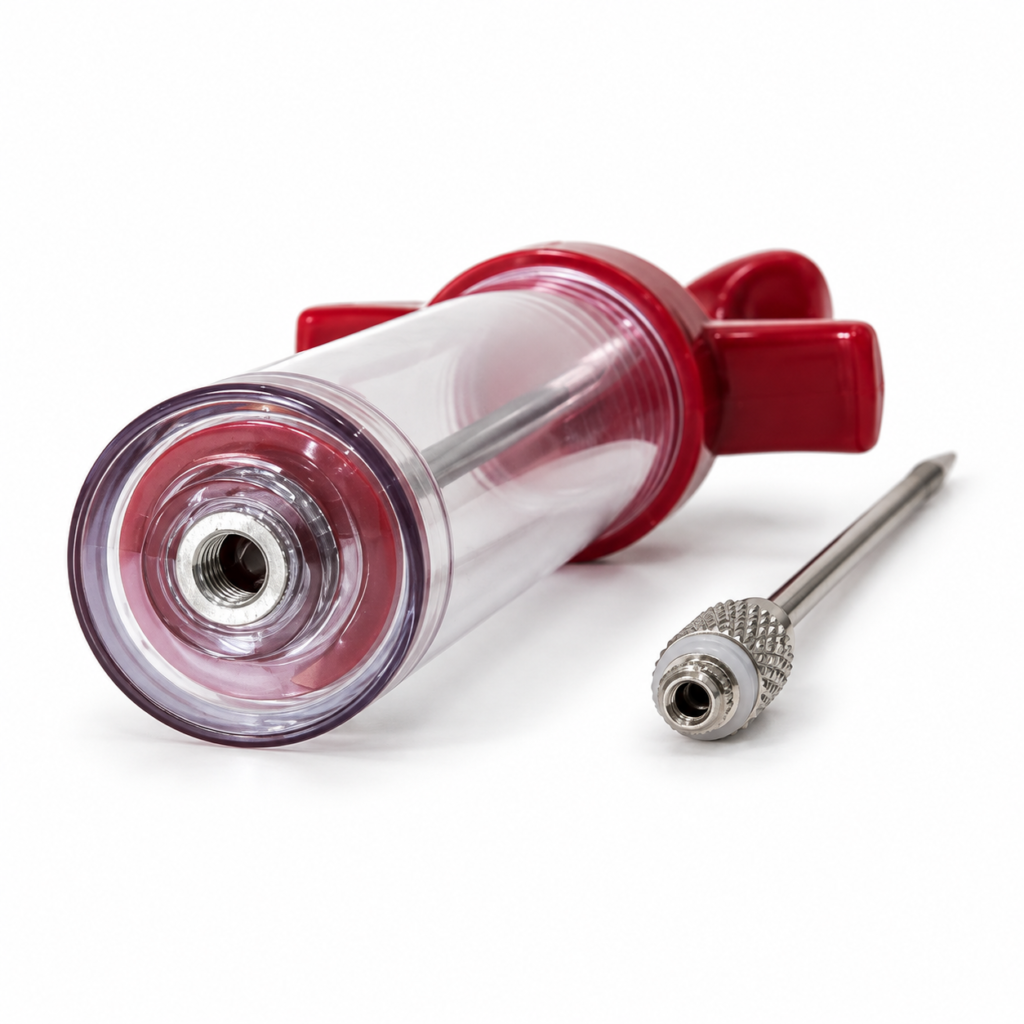
When a marinade injector stops flowing, release pressure and stop. A blocked needle, an unsuitable liquid, a poorly seated connection and a damaged component are different problems. Forcing the plunger can turn a minor issue into a spill or an injury from the pointed needle.
Start with what you can observe
Little or no flow with rising resistance: consider a blockage or liquid that is too thick. Leakage at the needle connection: inspect how the joint is seated. Leakage around the plunger: check the component fit and condition according to the supplied instructions.
Do not dismantle the injector while maintaining pressure on it. Remove it from the food carefully, point the needle away from people and set it in a controlled position before inspecting.
Check the marinade first
The HandyDost 30 ml injector listing calls for smooth liquid without seeds, herb pieces or other particles that could block the needle. A sauce suitable for coating meat may not be suitable for injection. Straining a recipe’s liquid may help only where that preparation still makes sense for the recipe.
Do not automatically dilute the entire marinade batch to force it through. Keep a separate portion for a different application, such as surface marinating, if that is appropriate. See the comparison of preparation methods.
Inspect the joints and removable parts
With the injector empty and handled safely, check the screw-on needle connection for a normal fit. A cross-threaded, cracked or distorted connection should not be forced. Follow the supplied assembly method rather than adding tape, glue or improvised seals to a food-contact tool.
Check the plunger and barrel for visible damage and residue. Do not use oil or another lubricant unless the manufacturer specifically approves it for that component and food-contact purpose. An internet fix for an unrelated syringe is not a suitable repair instruction.
Clean a blocked passage carefully
Separate the components as intended and use the approved cleaning method. Keep the sharp point visible and away from your hand. Do not blow into the needle, suck liquid through it, or probe it while pointing it toward your face.
If an obstruction cannot be removed through normal cleaning without damaging the passage, stop using the needle and ask the seller about replacement. A kitchen injector should not require an improvised pressure test to prove that it works.
Keep contaminated liquid separate
Marinade that has contacted raw meat is not clean serving sauce. USDA’s grilling guidance recommends reserving a separate clean portion when sauce is needed later. Do not pour injector contents back into that reserved bowl during troubleshooting.
Clean the work surface and any utensils affected by a leak. Put the food back into appropriate refrigeration if a repair or replacement decision delays cooking.
What to tell the seller
Describe where liquid leaks, whether the plunger resists with an appropriate smooth liquid, and whether a component appears damaged. A clear photo of the connection is useful; there is no need to demonstrate the fault by forcing the needle at high pressure.
Read the basic injector method and after-use cleaning. More help is in the HandyDost guide library.