
Peeling Ginger with a Spoon or Peeler: Work Around the Shape
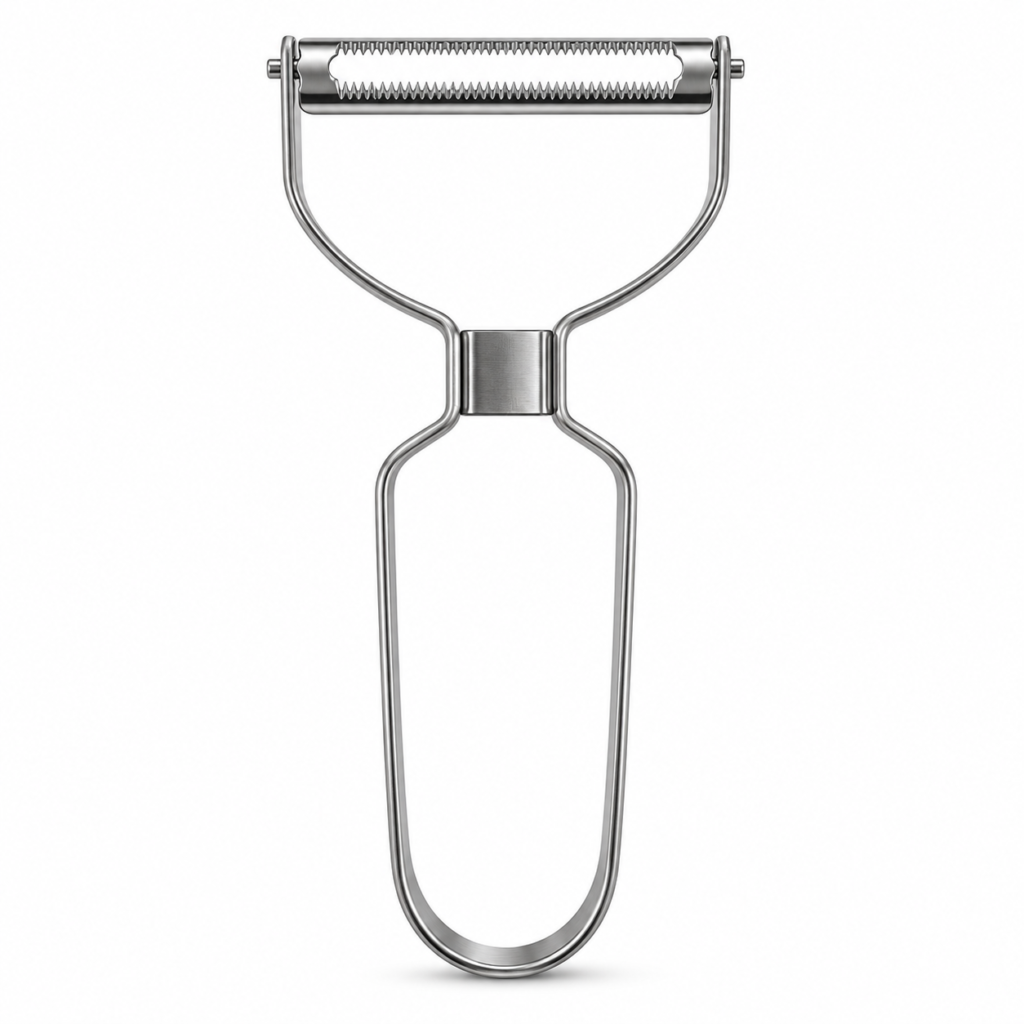
A vegetable peeler works most comfortably when the ingredient offers a surface you can follow with a controlled stroke. Ginger often has bends, narrow joins and small knobs instead. For those awkward areas, the edge of an ordinary spoon can be a practical alternative to forcing a wide peeling blade around every curve.
Choose the piece before the tool
Look at the amount of ginger your recipe needs. A long, relatively straight section is easier to hold than the very last small knob. Separate the piece you intend to prepare using an appropriate knife and a stable board, keeping your fingers clear. Do not try to hold a whole branching piece in the air while making difficult cuts.
Wash the ginger before preparation. If a piece is spoiled, peeling is not a way to make it sound again. Keep food preparation separate from attempts to salvage questionable ingredients.
Where the spoon helps
Epicurious’s ginger-peeling demonstration uses a spoon edge around the irregular surface. The useful idea is controlled scraping of the skin, rather than taking a deep cut through the flesh. You still need a steady grip and a clean work area.
Use light movements and rotate the ginger to present a manageable surface. Avoid pushing so hard that the spoon suddenly jumps off the piece. If a narrow join is difficult to reach, reconsider whether separating that section would give you better control.
Where a peeler may fit
| Ginger section | Practical approach to consider |
|---|---|
| A broad, straighter face | A suitable peeler with short controlled strokes |
| A rounded knob | A spoon edge that follows the curve |
| A tight join | Reposition or separate the section safely before continuing |
| A tiny remaining piece | Stop rather than bringing fingers into a sharp tool’s path |
The HandyDost serrated Y-peeler has a horizontal blade. Its shape does not make every small, uneven ingredient an easy fit. Choose the method you can control, and do not assume a product demonstration with a large potato proves the same handling is suitable for a ginger tip.
Peeling, grating and chopping are separate jobs
Check whether your recipe needs slices, fine mince, grated ginger or a paste. Removing the skin is only the first step. A peeler is not a grater, and a handheld coffee frother is not a ginger-paste blender.
Once the ginger is prepared, move it to a clean board or bowl for the next step. Clear peelings before chopping so that small skin fragments are not mixed back into the ingredient. Use the equipment specified by the recipe for any paste.
Use a small comparison rather than wasting the whole piece
Try the spoon on one suitable section and the peeler on another broad section. Compare your control and the amount of usable ginger remaining, not just speed. The more comfortable method may differ with the shape of the piece and your grip.
Keep any prepared remainder appropriately stored and labelled for its next use. Wash and dry the tools before returning them to the drawer; do not leave a sharp peeler hidden in a bowl of opaque washing water.
Read washing before peeling, Y-peeler handling and another ingredient-specific tool comparison. More guides are at HandyDost’s blog.
AI-assisted editorial guide; suggested comparisons are not hands-on tests performed by HandyDost.