
Vegetable Ribbons with a Peeler: What Works and What Does Not
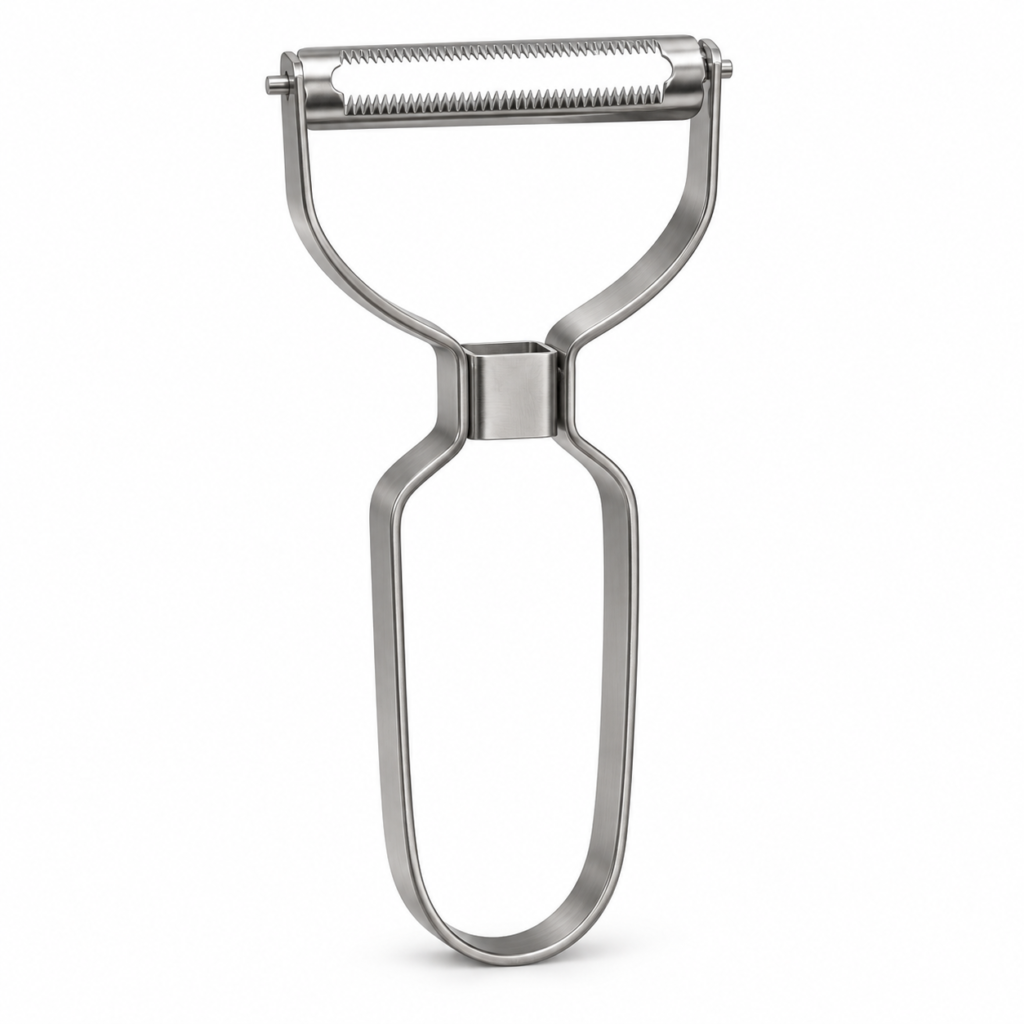
Vegetable ribbons, julienne strips and spiral noodles are different cuts. A peeler that removes a broad, thin strip may make a ribbon on suitable produce, but that does not mean it can create matchsticks or long spirals. Choose the finished shape before choosing the tool.
Identify the result you want
Ribbons are broad, thin strips. Julienne is a narrow strip-style cut. Spirals come from equipment designed to turn or guide the ingredient into that pattern. Do not use the names interchangeably when comparing online listings.
OXO’s assorted-blade peeler set separates straight, serrated and julienne functions. Its descriptions are helpful for understanding categories, not a guarantee of the cut made by a different model.
Check what your own blade is meant to do
The HandyDost Y-Shaped Vegetable Peeler is described as a serrated skin peeler. Its listing does not promise spiral noodles or a specific ribbon thickness. For a recipe where consistent wide ribbons are essential, select a tool explicitly suited to that result rather than buying based only on a tooth-like blade photograph.
If the blade produces an irregular strip, do not assume you can correct the tool’s design with more pressure. An appropriate peeler, mandoline with its required guard, or another recipe-specified tool may be the better choice.
Prepare the ingredient and the workspace
Wash the produce before preparation and dry the surface enough for a secure grip. Use a clean board or plate to collect the prepared strips, with scraps kept separate. Select an ingredient that can be supported comfortably rather than a tiny piece that places your fingers next to the blade.
When a recipe allows ribbons from a suitable firm vegetable, work in controlled passes and rotate or reposition it as the grip changes. Stop when the remaining piece becomes awkward to handle. The final small piece can be prepared another way if suitable; it does not need to become a perfect ribbon.
Keep the blade clear
Long strips can gather around the cutting head. Stop and clear them with the tool stationary. Do not put your fingers through the blade opening while pulling a strip free. A soft cleaning brush can help remove residue during washing without dragging a finger across the cutting edge.
If the strip keeps tearing, check the ingredient condition, the blade’s intended use and your handling. A very soft or irregular surface may not give the presentation you want. That is not necessarily a faulty tool.
Use ribbons where their texture is useful
For a salad, consider whether the ribbon size is comfortable to eat and whether a wet dressing should be added immediately or at serving. For a cooked dish, follow its recipe rather than assuming thin strips have the same preparation requirements as chunks.
This is a cut-selection guide, not a universal cooking-time chart. The tool controls the shape, while the recipe and ingredient determine the remaining preparation.
Avoid buying a ‘noodle maker’ by accident
Ask the seller what cut the tool actually produces and whether there is a demonstration of that exact product. Compare the written description with the head design. Claims such as ‘all-in-one’ should be broken down into individual functions you can verify.
Related guides: choosing a blade type, controlled Y-peeler handling and checking online product claims. Return to the HandyDost guide library.