
Vegetable Peeler Skipping or Clogging? Check These Things
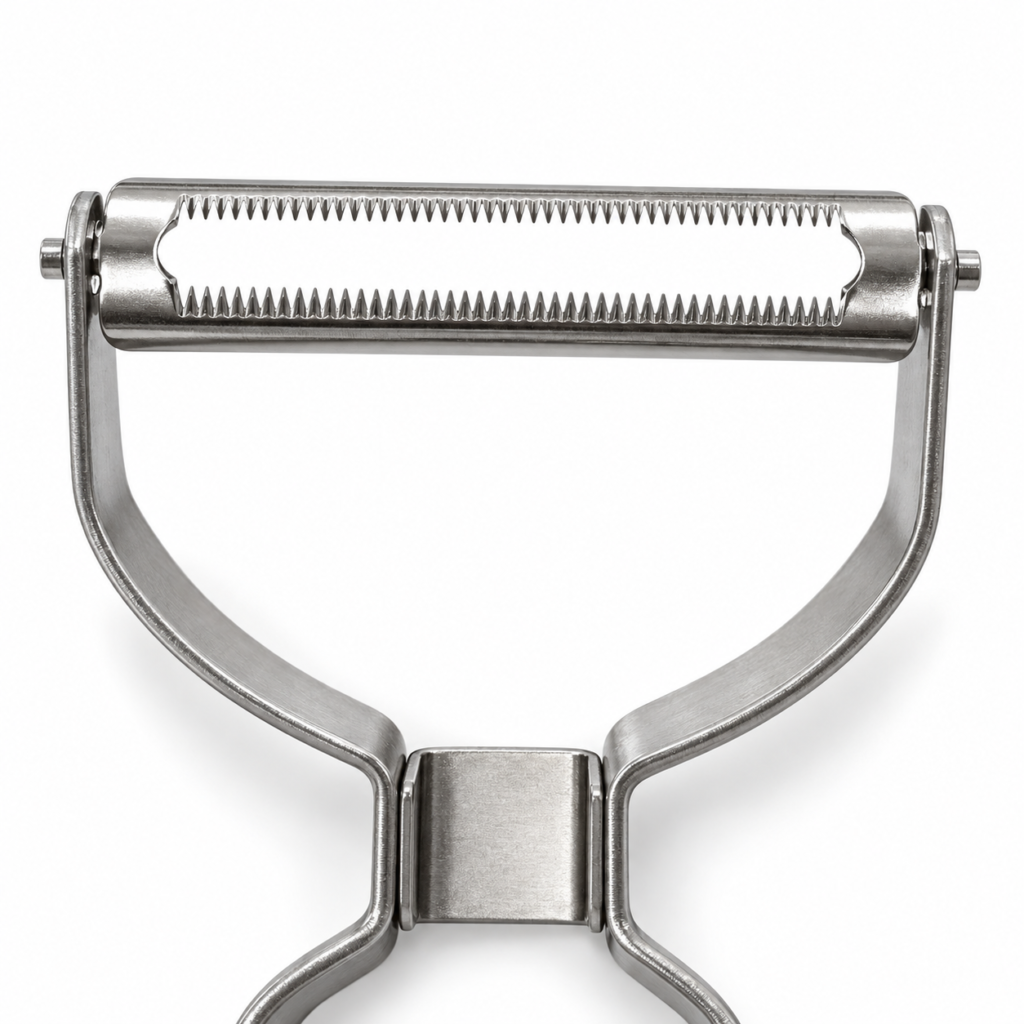
A peeler that skips over the skin and a peeler that fills with scraps are not necessarily suffering from the same problem. Identify whether the blade is failing to catch, catching too aggressively or becoming obstructed. Start with the clean, empty tool before blaming the ingredient or your grip.
Inspect the blade while it is stationary
Look for trapped peel, a loose mounting point, a bent edge or a damaged frame. Remove residue with a suitable soft cleaning brush, not a fingertip dragged across the blade. If the head is loose or visibly damaged, stop using it and ask about replacement.
The HandyDost model uses a serrated blade in a Y-shaped frame. Its care guidance recommends hand-washing, clearing residue and drying before storage. It does not instruct you to sharpen the serrations or dismantle the cutting head at home.
Check whether the blade suits the task
A straight peeler, serrated peeler and julienne cutter have different intended roles. Do not assume that any tool called a vegetable peeler should make the same cut on every food. See the blade-type comparison before treating an unexpected cut as a fault.
Very soft produce can be difficult to support, while hard or frozen ingredients may be outside the peeler’s stated use. A change in ingredient condition can explain why the tool feels different from the last time you used it.
If it skates across the surface
Dry the produce enough for a controlled grip. Reposition your hand so fingers stay clear, then try a short stroke at a slightly different angle. Make one small adjustment at a time. If you squeeze the ingredient harder while also increasing pressure and speed, it becomes difficult to tell what helped.
Do not try to make the blade bite by striking the surface. If a normal controlled stroke does not work after inspection and cleaning, choose another suitable preparation tool instead.
If peel builds up around the head
Stop between sections and clear the trapped material. Long scraps can gather around the cutting arrangement, particularly when you try to finish a large ingredient in one continuous action. Shorter strokes and regular clearing can make the work easier to manage.
Keep the prepared food and the scrap pile separate. A blade full of peel is harder to inspect, and a wet work area can make the next grip awkward. Do not continue until the head is visible and clear.
If the cut removes too much flesh
Reduce pressure and compare a shorter stroke. Check that you are using a peeling blade rather than expecting a julienne cutter to skim off a thin layer. The result depends on both tool design and handling, so do not assume a fixed peel thickness from a photograph.
If you are repeatedly cutting deep gouges in soft fruit, reconsider the preparation method. Not every ingredient needs peeling for every recipe, and a different suitable tool may provide better control.
Know when to stop troubleshooting
A damaged blade, loose joint or increasingly unpredictable cut is not a challenge to overcome with strength. Keep the tool out of use until it is assessed or replaced. Do not file an unfamiliar blade or bend the frame to imitate the shape of another peeler.
After an ordinary residue problem, wash, rinse and dry the tool before putting it away. Read controlled Y-peeler technique, cleaning and storage, and working with delicate tomato skin. The guide library includes more practical troubleshooting.