
When Should You Replace a Bath Brush? Check Condition, Not an Invented Countdown
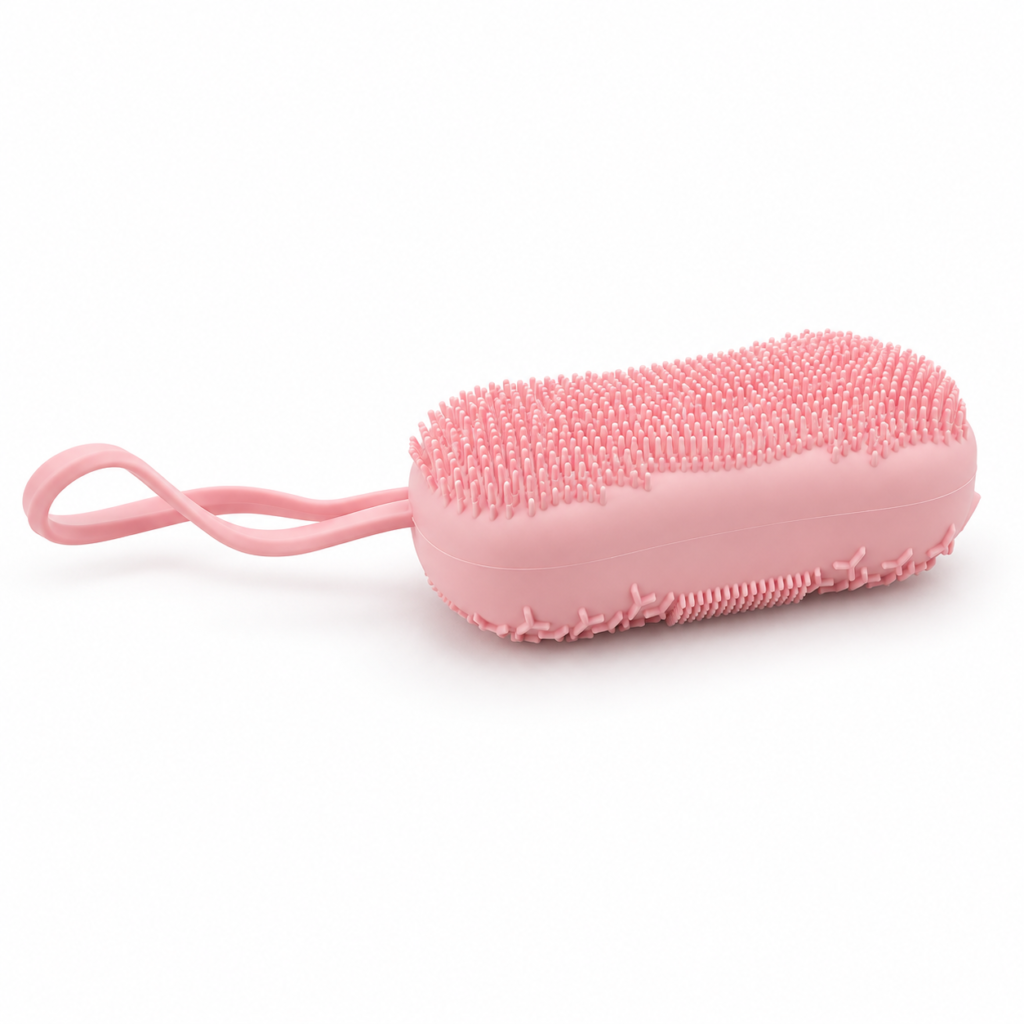
There is no verified replacement countdown in HandyDost’s published bath-brush information. A fixed claim such as replace every thirty days would be invented. Follow any supplied manufacturer schedule, and check the brush’s condition instead of relying only on how long you have owned it.
Inspect the parts that actually contact skin
Look at the bristles, textured surfaces and any exposed edges. A torn or rough area can change how the tool feels. Check the strap or loop as well: if it is damaged, the brush may be harder to hold or store as intended.
For a refillable brush, inspect the removable cover and compartment using the permitted opening method. For a sponge-insert brush, consider the condition and cleanability of the inner material, not just the outer colour.
Use a condition checklist
| Observation | Practical response |
|---|---|
| Torn bristles, sharp damage or broken edges | Stop using it against skin and assess replacement |
| A cover that will not fit securely | Do not force it; check for damage and seek product support |
| Residue in an accessible area | Use the manufacturer’s cleaning method, then inspect again |
| Persistent odour or suspected mould | Stop use; do not conceal the issue with fragrance |
| An inner component that cannot be cleaned as required | Consider replacement rather than assuming an outer rinse is enough |
Do not promise a sterilising rescue
Boiling, microwaving or soaking in an improvised chemical mixture can damage a tool that is not rated for that method. A colour change after treatment does not prove it has become safe. Follow the actual cleaning instructions and do not mix household cleaners.
EPA’s mould guidance explains that mould can be difficult to remove fully from porous materials. Applied cautiously to a sponge-containing washing accessory, this supports not assuming that a quick surface rinse resolves contamination inside an absorbent component. It is not a laboratory assessment of the HandyDost brush.
Distinguish staining from damage without guessing
A photograph alone may not tell you whether a mark is harmless staining, residue or another problem. Do not diagnose the material from colour only. Use the maker’s care information, the tool’s condition and appropriate advice where needed.
If the brush causes pain, irritation or a rash, stop using it. Persistent or concerning skin symptoms belong with a qualified clinician, not a stronger scrubbing routine.
Fix the storage issue before replacing
A replacement stored in the same wet closed container may face the same care problems. Choose a place that permits the intended drainage and drying, keep the holder clean and inspect hidden contact points. A hanging loop is useful only when the position actually allows the brush to dry.
For shared bathrooms, identify each person’s washing accessories rather than treating a new brush as a communal item. Keep an unopened spare dry until needed.
Buy the next one around care access
Ask how it opens, what can be cleaned and whether replacement parts exist before purchasing. Do not assume that a part is separately replaceable just because it appears detachable in a photograph.
Read persistent odour checks, drying between uses and storage in a poorly ventilated bathroom. More guides are in the HandyDost library.
AI-assisted care guidance, not a medical diagnosis or a tested replacement interval.