
How to Dry a Bath Sponge Brush Between Showers
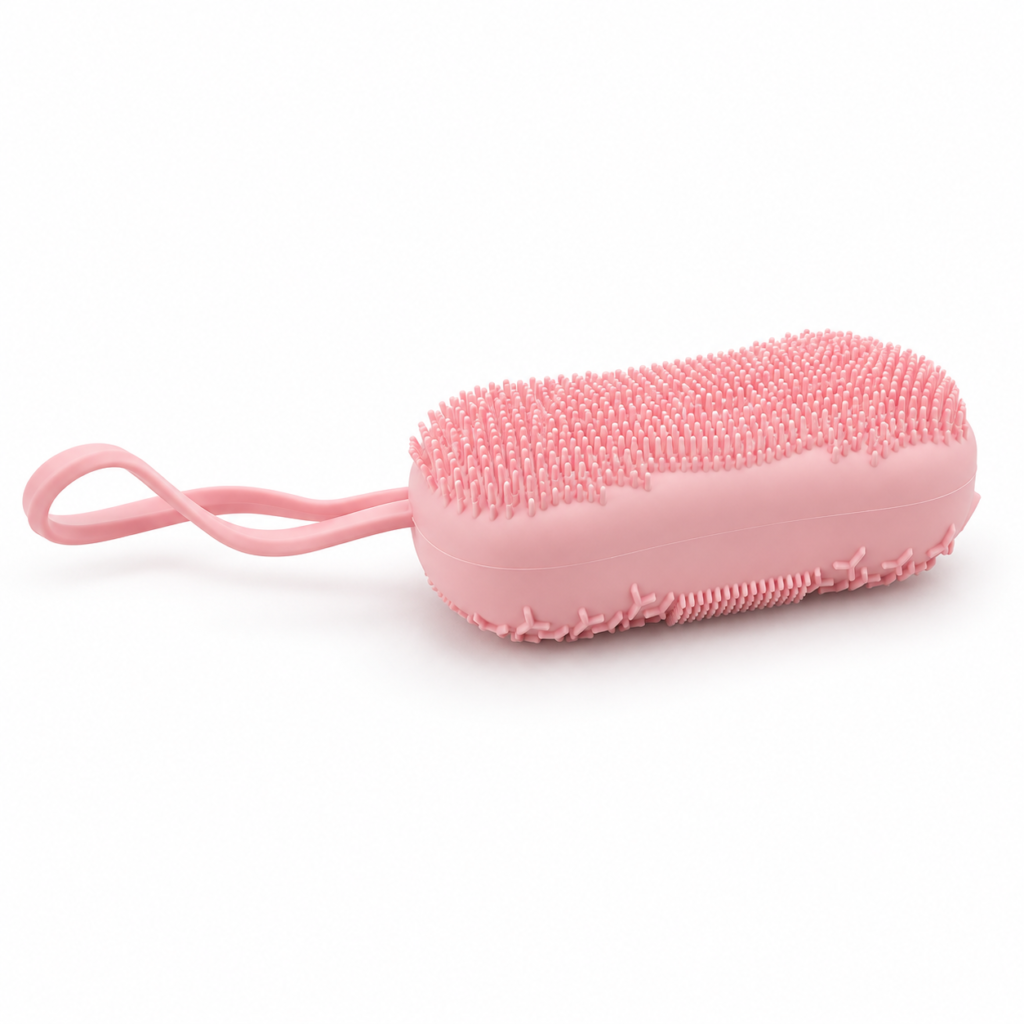
A bath sponge brush needs a drying routine, not just a hook. Rinse away body wash, remove excess water as the product instructions allow, and place it where water can drain and air can reach it. A dry-looking outer surface does not necessarily tell you whether an enclosed sponge is dry.
Identify what needs to dry
The HandyDost pink bath sponge brush has textured outer surfaces and a visible sponge insert. The purple refillable brush has a chamber with a removable cover. A sponge and a reservoir are different designs, so they need different inspection points.
Do not pry apart a casing because a photograph shows a seam. Use only the access and removable parts intended by the manufacturer. If the sponge cannot be removed, follow the cleaning method for that assembled design.
Finish rinsing before you start drying
Rinse away soap residue from the textured surfaces and accessible openings. For the pink brush, its listing advises gently pressing out excess water and hanging it to dry. Do not twist, stretch or squeeze the casing aggressively if the instructions do not allow it.
For a refillable chamber, empty and clean it regularly rather than repeatedly adding new liquid over old residue. Dry the accessible compartment and cover in the intended way before storage.
Choose a better drying position
- Move the tool out of the direct shower stream.
- Avoid a ledge where water collects beneath it.
- Position it so trapped water can drain through its intended openings.
- Leave space around it instead of pressing it between bottles.
- Check its condition before putting it into enclosed storage.
If it hangs beneath a dripping shampoo bottle, the loop is not solving the drying problem. A different position may help more than buying another brush with the same shape.
Do not promise a universal drying time
Bathroom conditions, sponge design and the amount of retained water vary. We do not specify that every brush is dry after a fixed number of hours. Inspect the actual tool and give it enough suitable drying time rather than treating an online countdown as proof.
EcoTools’ care guidance for its cleansing tools also includes rinsing and air drying. That supports the general care principle, but replacement intervals or disassembly directions for its products should not be transferred to a different brush.
When normal care does not resolve the problem
If visible residue, persistent odour, damage or another concerning condition remains after appropriate cleaning, stop using the tool and seek the seller’s guidance or replace it. Do not cover up the issue with fragrance or a fresh refill.
Do not invent a boiling, bleach or dishwasher treatment for an unverified material. A harsh cleaning method may damage the casing or bristles without giving you a reliable result.
Build the routine around your bathroom
In a shared bathroom, give each person’s tool a separate identifiable place. Before travel, allow the brush to dry fully when possible and pack it so it can be taken out promptly on arrival. Enclosing a damp brush in a toiletry bag is not a drying method.
Read packing a bath brush for travel, refillable-brush care and choosing a washing tool. More practical care guides are in the HandyDost library.