
Can an Egg Slicer Cut Mushrooms, Fruit or Cheese?
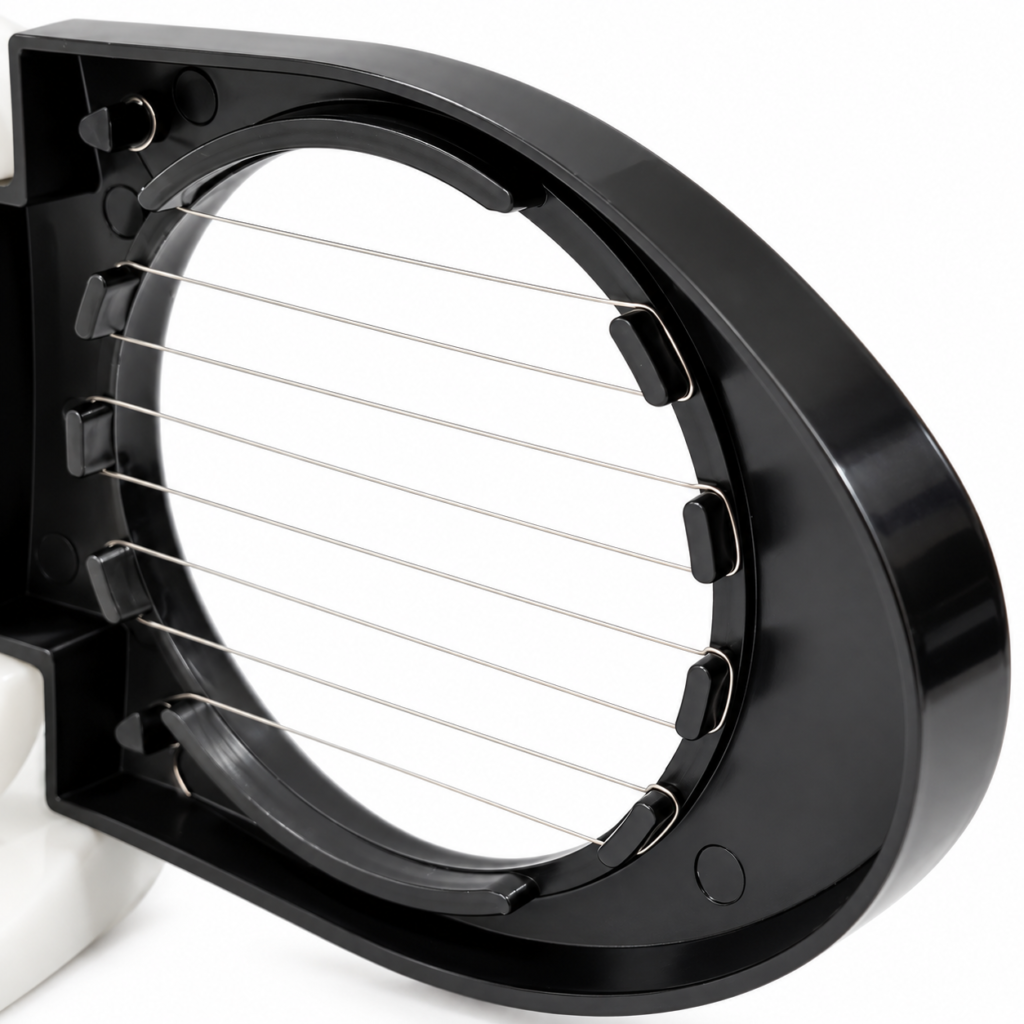
Do not assume an egg slicer can cut mushrooms, fruit or cheese unless its manufacturer explicitly allows those foods. Some tools are marketed for wider use, but that claim belongs to the specific model. A list of internet hacks is not evidence that your slicer’s wires, hinge and holder are built for the same tasks.
The HandyDost Egg Slicer is listed for peeled, cooled hard-boiled eggs. Its care instructions say not to force it through shells, frozen food or hard ingredients. We have not verified additional foods for this model, so this guide does not recommend experimenting with them.
Why fitting in the holder is not enough
A food can fit inside the frame while still being too resistant, too slippery or the wrong shape to support. The holder is part of the cutting system. If an ingredient balances on one edge or shifts as the frame lowers, a clean cut becomes harder to control.
Different models also use different frames and cutting arrangements. OXO’s own egg-slicer description, for example, sets out the functions of that product. It should not be treated as the specification for an unconnected seller’s tool.
Mushrooms and soft fruit
The useful question is not whether someone has sliced a mushroom successfully once. It is whether the instructions for your tool permit it and whether the cutting surfaces can be used and cleaned as intended. A single successful attempt does not establish a safe long-term use or a supported warranty claim.
For the HandyDost model, use an appropriate knife and board for these foods unless the supplier confirms an additional intended use. This may be less exciting than a multipurpose claim, but it protects both the tool and the clarity of the buying decision.
Cheese and firmer ingredients
Cheese varies greatly in firmness and stickiness. Do not treat the category as one uniform ingredient. Frozen foods, hard cheese and unpeeled eggs are not suitable strength tests for a fine wire frame. If the ingredient needs substantial pressure, stop rather than using the hinge as a lever.
Choose a purpose-built cheese slicer, knife or other appropriate tool based on that product’s instructions. There is little value in saving one utensil wash if it damages the slicer you use regularly for breakfast.
What to do after a wire has bent
Empty and inspect the tool. Do not keep cutting food with a loose or broken wire, and do not hide the damage by pressing from a different angle. Ask the seller whether a suitable replacement frame or replacement tool is required.
For cleaning, avoid scraping residue off a wire with a sharp object. The wire-cleaning guide explains how to loosen food and protect the attachment points. If the empty frame no longer moves normally after cleaning, the issue is mechanical rather than a dirty egg holder.
A better way to decide whether you need another tool
List the ingredient and cut you want: egg slices, tomato wedges, cheese slices or vegetable ribbons. Then match the task to a tool whose intended use is clear. This avoids buying several products that all make broad ‘multipurpose’ claims without solving your particular preparation problem.
For everyday eggs, see the supported slicing method. For alternatives, read egg slicer versus knife and the peeler blade comparison. Browse the HandyDost guide library for more task-based advice.