
Can a Milk Frother Whip Cream? Check the Cream and the Tool First
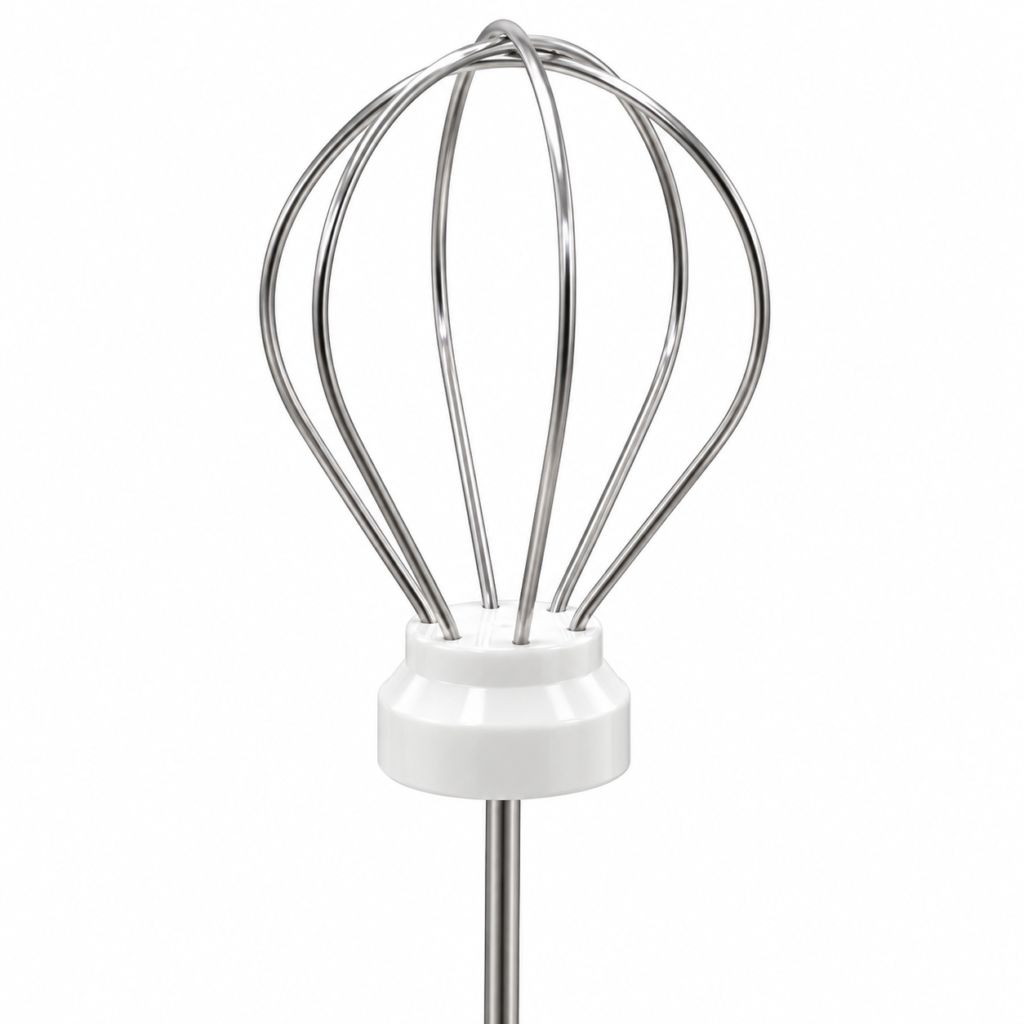
Some small whisks can aerate a little cream, but the presence of a balloon-shaped attachment does not guarantee that a handheld milk frother can make a bowl of stiff whipped cream. Ingredient suitability and motor capability are separate questions. Check both before using a coffee tool for dessert preparation.
Start with cream that is meant to whip
Read the carton for its intended use. Milk, tea whitener, cooking cream and whipping cream are not interchangeable simply because they are dairy-related ingredients. If the label gives whipping directions, use those directions as your starting point, including any chilling requirement.
KitchenAid’s whipped-cream guide describes whipping cream through soft and firmer stages and warns against going too far. Those texture stages are useful to understand; its stand-mixer settings and timings are not settings for a different handheld appliance.
Decide whether you need soft topping or firm decoration
A spoonable topping for a single dessert is a different target from cream that must hold a piped shape across a whole cake. Write down the job before beginning. If the recipe requires a capable hand or stand mixer, using a tiny frother does not remove that requirement.
The HandyDost Coffee Beater & Milk Frother is listed for milk frothing and light mixing. Its published information does not verify a whipping-cream batch size, stiff-peak performance or continuous operating duration. Ask for the supplied instructions rather than relying on a generic advertisement for a similar-looking model.
Use a clear stop rule
Do not let determination turn into an overloaded tool. Stop if the motor slows markedly, the head struggles to turn, the connection loosens or the handle becomes unusually hot. Switch off before lifting the attachment or changing tools. More run time is not a reliable answer to a mixture that is too heavy for the device.
Where the manufacturer expressly permits the task, keep any trial within the specified amount and operating limits. Without that permission, choose a manual balloon whisk or a suitable mixer instead. A USB connector does not tell you how much resistance the motor can handle.
Distinguish ingredient problems from equipment problems
| Observation | Useful next check |
|---|---|
| The cream remains very liquid | Does the package actually say it is suitable for whipping? |
| The mixture warms during repeated attempts | Stop and review the recipe’s temperature instructions and equipment suitability |
| The attachment slows as the cream thickens | The load may exceed the tool’s intended light-mixing role |
| The texture turns grainy rather than smooth | Stop whipping and consult the recipe’s over-whipping guidance |
Change only one variable on the next attempt. Buying different cream, adding sugar and changing attachments simultaneously makes it hard to learn what caused the result.
Choose the simplest workable alternative
For a drink, a milk-foam topping may meet your goal without needing whipped cream at all. For cake decoration, use the recipe’s recommended equipment. For an occasional small dessert, a conventional hand whisk avoids motor questions, although the ingredient still has to be suitable.
Read cold foam versus whipped cream and the attachment guide. Cleaning instructions are in the frother-care article, with more topics in the guide library.
AI-assisted editorial guidance, not a claim that the HandyDost frother has passed a whipped-cream performance test.