
Coffee Beater vs Hand Mixer: Which Tool Fits Your Task?
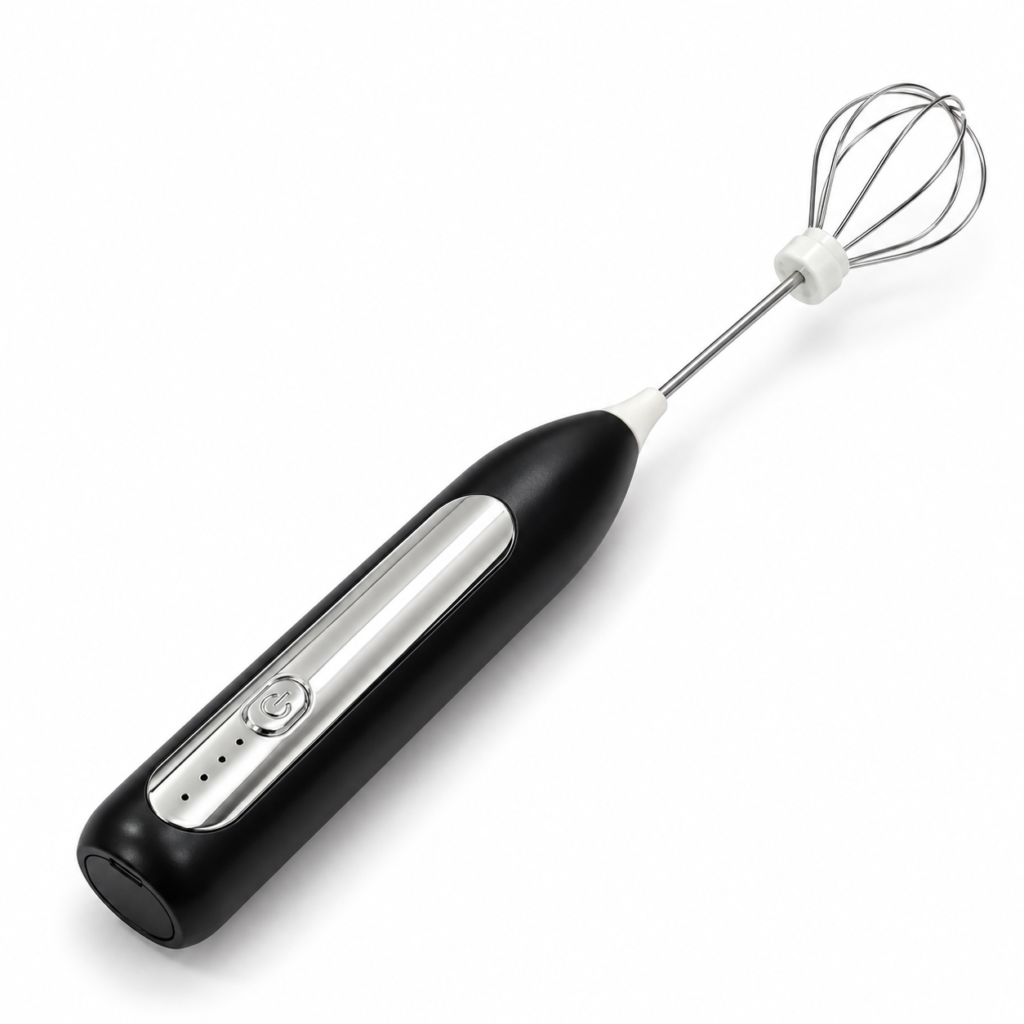
Choose a coffee beater for small drink and light-mixing tasks. Choose a hand mixer when the recipe requires a tool designed for a larger batch or a heavier mixture. The fact that both tools rotate does not make them substitutes. Attachment size, motor design and the manufacturer’s intended use matter more than a product photograph showing an impressive splash.
Start with your most frequent task
Write down the three things you expect the tool to do. ‘Make milk foam for one coffee’ is specific. ‘Help in the kitchen’ is not. A short task list makes it easier to compare products and avoids paying for a set of attachments you will rarely use.
For the HandyDost Electric Coffee Beater & Milk Frother, the current listing describes a double-coil head for milk and drinks, plus a balloon whisk for light mixing. It explicitly advises against hard, frozen or thick dough mixtures. That limit should guide your choice.
Match the job to the kind of tool
| Your task | Sensible starting point |
|---|---|
| A foam topping for one drink | A handheld frothing wand and a suitable cup. |
| A small, loose mixture | A light whisk attachment, only within its stated limits. |
| Repeated larger baking batches | A mixer whose manufacturer specifies the recipe and quantity. |
| Thick dough or hard ingredients | A tool explicitly designed for those ingredients, not a drink frother. |
This is a task-selection guide, not a claim that every hand mixer can knead every dough. Check the individual mixer manual as carefully as you would the coffee beater listing.
The cup is part of the decision
A small head can be convenient when the container is a mug or a compact jug. A larger mixing tool needs its own clearance and a suitable bowl. Before ordering, think about the vessels you already own and whether the head will fit without scraping the bottom or sides. Avoid using the purchase as a reason to force a tool into an unsuitable container.
Also consider whether you need heating. A handheld wand generally mixes or aerates; it is distinct from an automatic heated milk jug or a steam wand. Zulay’s explanation of frother types illustrates why those categories should not be combined into one specification.
Compare the whole routine, including cleaning
A useful comparison includes setting up, changing attachments, washing food-contact parts and finding somewhere to dry them. A compact device only earns its place if you can use it comfortably in that routine. Ask whether attachments detach, whether a charging cable is included, and how the handle must be cleaned.
Do not estimate motor power from the number of indicator windows. Nor should ‘USB rechargeable’ be treated as proof of a particular battery capacity, operating duration or charging speed. If that number matters for your purchase, obtain a model-specific answer before paying.
When buying neither is the right answer
If you whisk one small bowl occasionally and are content with a manual whisk, a powered tool may not solve a meaningful problem. Conversely, if your usual job is a heavy baking mixture, buying a cheaper frother first can mean buying the correct mixer later anyway. Compare against your actual workload, not just the lowest sticker price.
A coffee beater makes the most sense when the recurring task is a small drink or a light mixture, the attachments suit that task, and its care routine fits your kitchen. For more detail, read coil head versus balloon whisk and how to compare online gadget listings. Return to the guide library.