
Manual or Electric Kitchen Tools During Load Shedding: Plan the Task, Not Just the Battery
When planning a kitchen routine around possible power interruptions, separate the tasks before choosing equipment. Peeling, slicing, whisking, cooking and keeping food cold have different needs. A rechargeable tool may help with one job, while a manual alternative may be enough for another.
This is a general household-planning guide, not a report of current outages, a local load-shedding schedule or a prediction about electricity supply.
Make a task map
| Task | Possible approach | What it does not solve |
|---|---|---|
| Peeling vegetables | A suitable manual peeler | Washing, cutting and cooking the food |
| Slicing a cooked egg | A manual slicer or suitable knife | Cooking and refrigerating the egg safely |
| Light whisking | A manual whisk or charged tool used as instructed | Heating or blending hard ingredients |
| Cold storage | A separate temperature-control plan | A manual gadget cannot replace refrigeration |
Choose around the jobs you actually repeat. Do not buy several battery-powered items if a spoon or manual whisk already handles the occasional task comfortably.
Know what the rechargeable tool includes
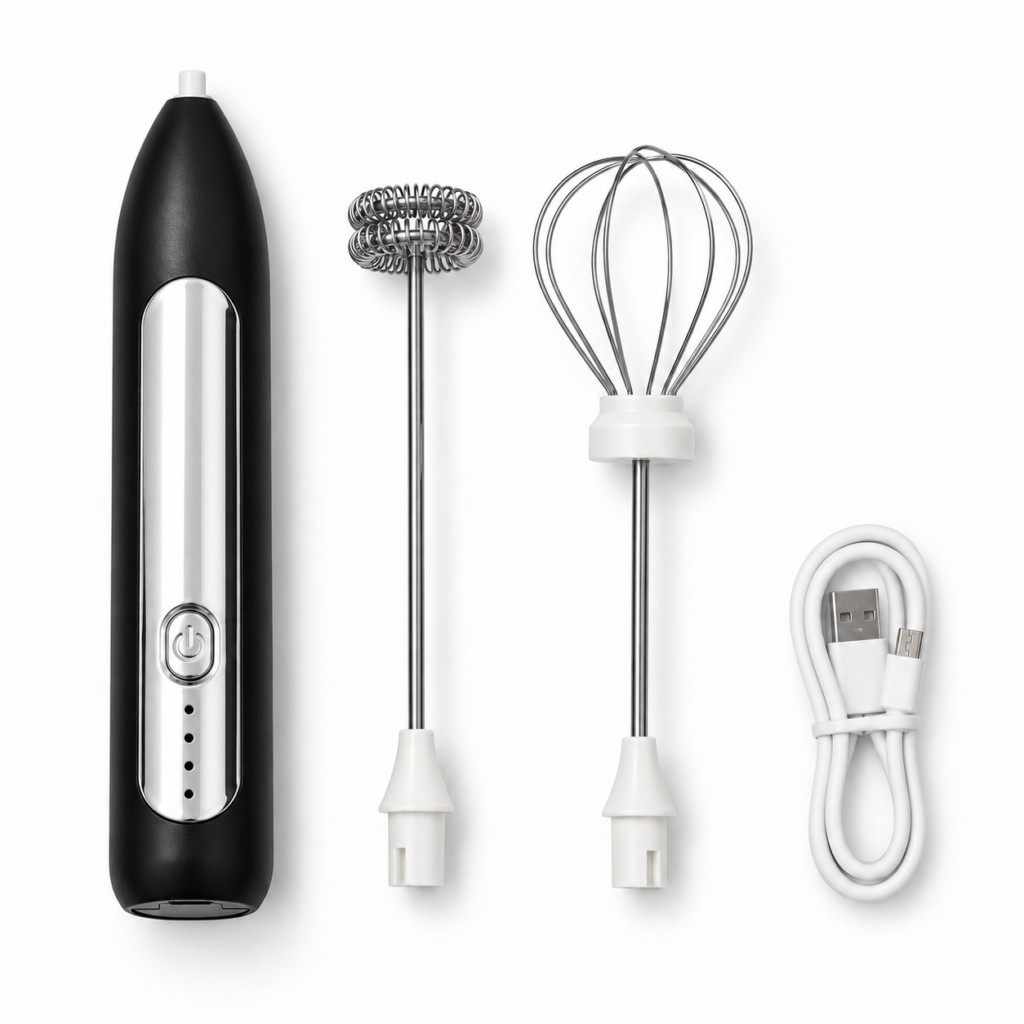
The HandyDost Coffee Beater & Milk Frother is supplied with two attachments and a USB cable. Its published listing does not establish a verified battery runtime, charging duration or capacity for repeated large batches.
Follow the supplied charging and operating instructions. Do not improvise adapters or assume that any power source with a matching-looking connector is appropriate. Keep charging equipment dry and do not use damaged cables or a tool showing damage.
Keep a realistic manual alternative
A manual whisk can be a sensible alternative for a suitable light mixing job, but it does not reproduce every powered-appliance function. A peeler does not become a food processor, and a handheld frother does not become a blender when the mains blender is unavailable.
Choose a meal that fits the equipment you can use safely. A simple mixed drink may be more practical than a frozen-fruit shake that requires a suitable blender.
Food safety remains a separate priority
FDA’s power-outage guidance recommends keeping refrigerator and freezer doors closed as much as possible and using temperature information to assess stored food. Follow the complete guidance for the situation rather than judging safety by smell or appearance.
Do not prepare a large batch of egg sandwiches or marinated meat simply because the cutting tools work without power. If adequate cold storage cannot be maintained, change the preparation plan. Cooking later is not a reliable rescue for every food that has been stored unsafely.
Prepare the workspace, not a complicated gadget collection
Keep a clean board, a suitable knife, an ordinary whisk and the tools you genuinely use accessible. The manual Y-peeler and egg slicer do not need electricity, but they still need cleaning, safe handling and appropriate ingredients.
A small written plan can list which tasks move earlier and which should wait. Review that plan against the actual conditions instead of relying on an unverified battery-life promise.
Read charging checks, frother versus blender and preparation with cold-storage boundaries. More guides are at HandyDost’s blog.
AI-assisted household planning guidance, not an electrical installation or emergency-response instruction.