
Dalgona Coffee vs Frothed Milk: Why the Two Foams Need Different Methods
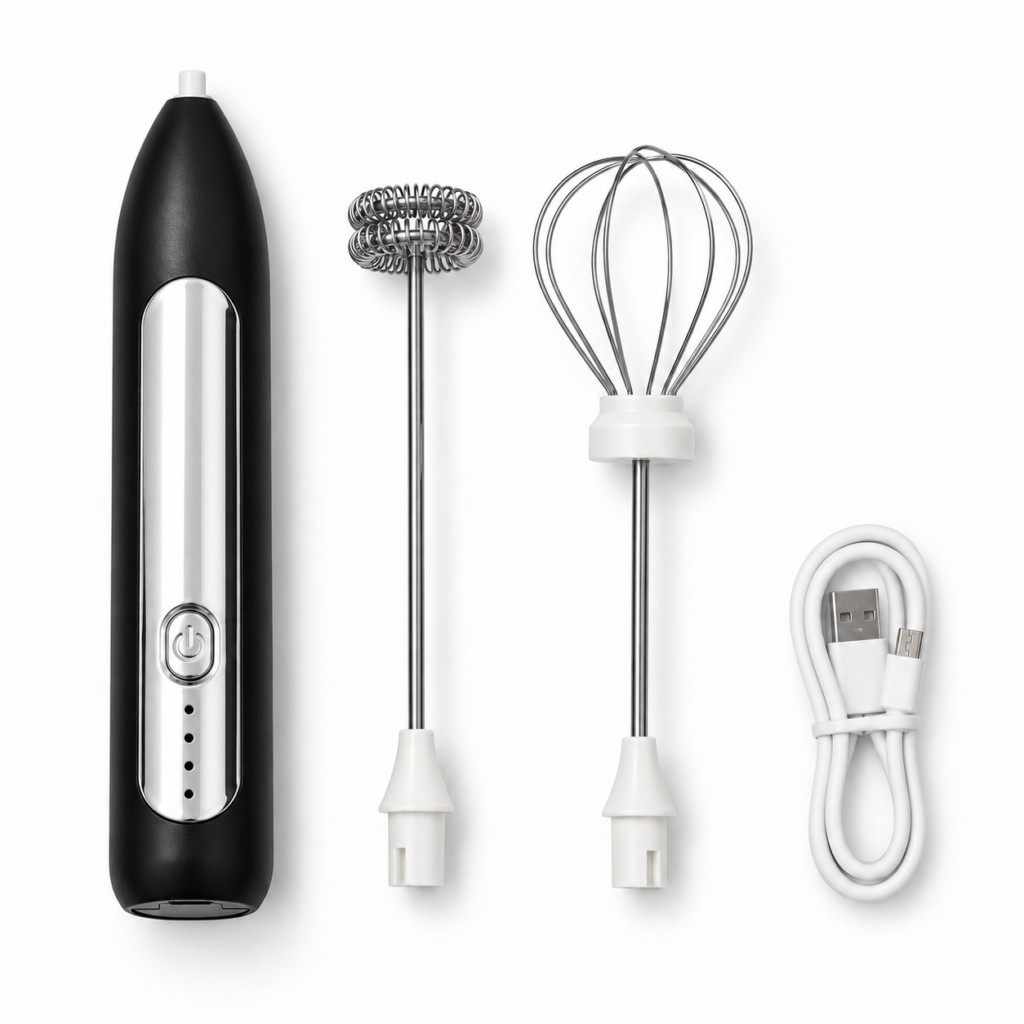
Dalgona coffee and a milk-foam coffee can have similar layered appearances while being made in opposite ways. In dalgona, the whipped layer is a coffee mixture placed over milk. In a milk-foam drink, you prepare the coffee and add aerated milk. Knowing which layer you are making prevents wasted ingredients and unrealistic expectations of a small beater.
Identify the mixture that is being whipped
Nescafe’s dalgona recipe whips instant coffee, sugar and water before placing the resulting topping over milk. It lists a hand mixer as equipment. That is a clear example of coffee foam, not milk transformed into a thick coffee-coloured cream.
By contrast, the coil head of a handheld milk frother is intended to work in a relatively fluid drink. The two methods may use a powered whisk, but that visual similarity does not establish equal load, run time or batch capacity.
Choose the result before choosing the tool
| Question | Dalgona-style route | Milk-foam route |
|---|---|---|
| What goes into the mixing vessel? | The specified instant-coffee mixture | Milk or a suitable milk-based recipe |
| What is the topping? | Whipped coffee mixture | Aerated milk |
| What should guide the equipment choice? | The recipe’s mixer requirement and growing thickness | The wand’s milk volume and operating instructions |
Do not substitute ground coffee for instant coffee simply because both packets say coffee. Ground particles do not behave as a dissolved instant-coffee mixture. Likewise, a premixed three-in-one sachet changes the ingredient balance and should not be assumed to follow another recipe’s proportions.
Protect the small motor from a thickening mixture
The HandyDost Coffee Beater is described for frothing and light mixing. Its two attachments do not prove that it can complete every recipe written for a hand mixer. A dense mixture that is becoming hard to move is a reason to stop, not a reason to press the button more firmly.
Use the equipment recommended by your chosen dalgona recipe. Never run a stalled attachment continuously or assume a USB cable turns a handheld device into a mains-powered mixer. Keep the handle dry and switch off before changing heads.
Plan one serving before a whole tray
For a first attempt, prepare a single serving using a published recipe rather than multiplying every ingredient for a gathering. Set out the milk and serving glass, leaving room for the topping. That lets you judge sweetness and the relative size of each layer before making more.
Take notes on what you changed. If you remove sugar, use a different instant-coffee blend and swap equipment together, you are no longer evaluating the original method. A different outcome should not automatically be blamed on the beater.
An easier alternative is not a failed dalgona
You can make a pleasant instant coffee with a light milk cap without creating a dense whipped-coffee topping. Dissolve the coffee separately, prepare the milk using the wand instructions and combine them. That is a different drink, not a defective version of a social-media recipe.
Compare a coffee beater with a hand mixer, follow the simple instant-coffee method or explore other topping choices. Return to the guide library for more.
AI-assisted guide; no independently tested dalgona capability is claimed for the HandyDost model.